
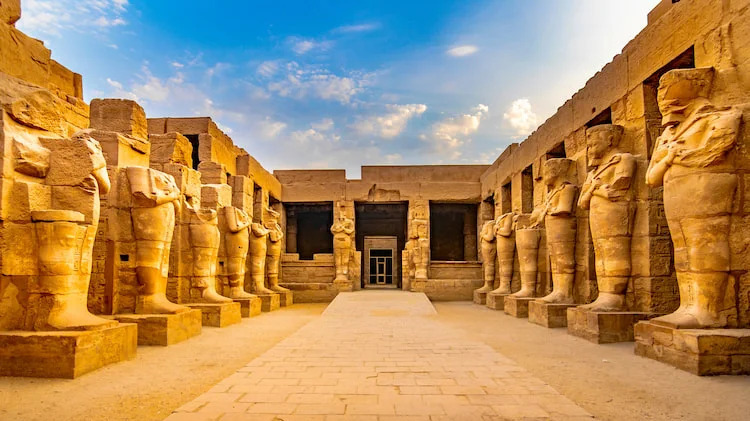
If you’re exploring the wonders of Upper Egypt, Karnak Temple is an unmissable masterpiece. Located in Luxor on the east bank of the Nile, this vast religious complex is one of the largest temple sites ever built. For travelers searching for history, culture, and iconic Egyptian landmarks, Karnak Temple stands as a symbol of power, faith, and architectural brilliance.
Where Is Karnak Temple Located?
Karnak Temple is situated in modern-day Luxor, which was once known as ancient Thebes. The complex lies just 3 km north of Luxor Temple and forms part of the UNESCO World Heritage Site of ancient Thebes.
Its strategic location along the Nile made it a central hub of religion and politics during Egypt’s New Kingdom period.
History of Karnak Temple
Construction of Karnak Temple began around 2000 BCE during the Middle Kingdom and continued for over 2,000 years. Many pharaohs contributed to its expansion, including:
-
Hatshepsut
-
Thutmose III
-
Seti I
-
Ramesses II
Each ruler added pylons, obelisks, statues, and chapels to honor the chief god Amun-Ra and demonstrate their devotion and authority.
The Great Hypostyle Hall
One of the most breathtaking features of Karnak Temple is the Great Hypostyle Hall. This massive hall contains 134 towering sandstone columns arranged in 16 rows. Some columns reach a height of 21 meters.
Walking through the Hypostyle Hall feels like stepping into a stone forest. The walls and columns are covered with detailed carvings that tell stories of military victories, religious rituals, and royal ceremonies.
Key Highlights of Karnak Temple
1. Avenue of Sphinxes
A ceremonial road lined with ram-headed sphinx statues once connected Karnak Temple to Luxor Temple.
2. Sacred Lake
Used by priests for ritual purification, the Sacred Lake remains one of the most atmospheric areas of the complex.
3. Obelisks of Hatshepsut
The towering granite obelisk of Hatshepsut is one of the tallest surviving ancient obelisks in Egypt.
Why Karnak Temple Is Important
Karnak Temple was the spiritual center of ancient Egypt, primarily dedicated to Amun-Ra, king of the gods. It symbolized divine power and reinforced the connection between the pharaoh and the gods.
Today, Karnak Temple is one of Egypt’s most visited archaeological sites, attracting millions of tourists every year.
Best Time to Visit Karnak Temple
The ideal time to visit Karnak Temple is between October and April when temperatures are cooler. Early morning or late afternoon visits provide softer lighting for photography and a more comfortable experience.
Don’t miss the evening Sound and Light Show, which brings the history of Karnak Temple to life through dramatic storytelling and illumination.
Travel Tips for Visiting Karnak Temple
-
Wear comfortable walking shoes.
-
Bring water and sun protection.
-
Hire a licensed guide to fully understand the historical significance.
-
Combine your visit with Luxor Temple and the West Bank (Valley of the Kings) for a complete Luxor experience.
Frequently Asked Questions (FAQ)
How old is Karnak Temple?
Karnak Temple is over 4,000 years old, with construction beginning around 2000 BCE.
How long does it take to explore Karnak Temple?
Most visitors spend 2–3 hours exploring the complex.
Is Karnak Temple worth visiting?
Absolutely. Karnak Temple is one of the most impressive ancient religious sites in the world and a highlight of any Egypt itinerary.
Final Thoughts
Karnak Temple is more than just an ancient monument it is a living testament to the greatness of ancient Egyptian civilization. From colossal columns to sacred lakes, every corner of the complex tells a story carved in stone.
If you're planning a trip to Luxor, make sure Karnak Temple is at the top of your list. It’s not just a visit it’s a journey through 2,000 years of history.
