
Temple of Khnum: The Sacred Island Shrine of Elephantine
The Temple of Khnum is one of Upper Egypt’s most fascinating yet often overlooked ancient sites. Located on Elephantine Island in the heart of the Nile, this sacred complex reveals how ancient Egyptians understood creation, the Nile’s floods, and divine craftsmanship. If you’re planning a cultural trip to Aswan, the Temple of Khnum offers a powerful blend of mythology, architecture, and scenic beauty.
Where Is the Temple of Khnum Located?
The Temple of Khnum stands on Elephantine Island, just opposite modern Aswan in southern Egypt. The island sits near the First Cataract of the Nile, historically marking Egypt’s southern border with Nubia.
This strategic location made Elephantine Island an important trading and military hub in ancient times. More importantly, it was considered the mythical source of the Nile’s annual flood — the lifeblood of Egyptian civilization.
Who Was Khnum?
The temple is dedicated to Khnum, one of the oldest Egyptian deities. Khnum was depicted as a ram-headed god and believed to be the divine potter who created humans on a potter’s wheel from Nile clay.
Ancient Egyptians associated Khnum with:
-
Creation of mankind
-
Control of the Nile’s inundation
-
Fertility and rebirth
-
Protection of the southern frontier
Because the Nile flood determined Egypt’s prosperity, Khnum’s role made him a central figure in religious life especially in Aswan.
History of the Temple of Khnum
The Temple of Khnum dates back to the Old Kingdom, though most visible ruins today belong to later periods, especially the New Kingdom and Ptolemaic era.
Several pharaohs contributed to the temple’s construction and restoration, including:
-
Hatshepsut
-
Thutmose III
-
Amenhotep III
During the Greco-Roman period, rulers expanded the complex further, maintaining Khnum’s worship well into the Ptolemaic dynasty.
Architecture of the Temple of Khnum
Although partially ruined, the Temple of Khnum still reflects classic Egyptian temple design:
1. Entrance and Courtyard
Visitors would pass through a monumental gateway into an open courtyard used for ceremonies and offerings.
2. Hypostyle Hall
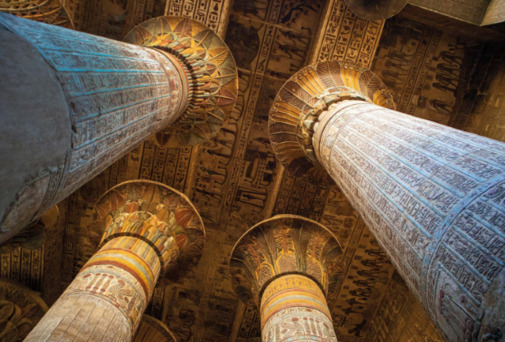
Columns once supported a roof decorated with celestial carvings. Some inscriptions honoring Khnum remain visible today.
3. Sanctuary
At the heart of the temple stood the sacred sanctuary, where priests performed daily rituals before the cult statue of Khnum.
Granite blocks, sandstone walls, and relief carvings demonstrate the craftsmanship of ancient Egyptian builders.
The Nilometer of Elephantine
Near the Temple of Khnum, archaeologists discovered an ancient Nilometer — a measuring structure used to track the Nile’s water levels. This device helped predict agricultural success and determine taxation levels.
The presence of a Nilometer reinforces Khnum’s strong connection to the Nile’s flooding cycle.
Religious Significance
The Temple of Khnum was part of a larger religious complex that included shrines to:
-
Satis
-
Anuket
Together, Khnum, Satis, and Anuket formed the Elephantine Triad — protectors of the Nile and guardians of Egypt’s southern boundary.
This sacred trio symbolized fertility, water, and divine protection.
Why Visit the Temple of Khnum?
If you are exploring Aswan’s archaeological treasures, the Temple of Khnum offers:
-
Fewer crowds than larger temples like Karnak Temple
-
Stunning Nile views
-
Authentic ruins with deep mythological meaning
-
Access to Elephantine Island’s archaeological museum
For travelers interested in ancient Egyptian religion and creation myths, this site provides valuable insight beyond the more famous monuments.
Best Time to Visit
The ideal time to visit the Temple of Khnum is between October and April, when temperatures in Aswan are cooler. Early mornings or late afternoons offer the best lighting for photography and more comfortable exploration.
How to Get There
You can reach Elephantine Island by:
-
Local felucca boat from Aswan Corniche
-
Motorboat taxi
-
Guided historical tour
Most tours of Aswan include Elephantine Island alongside Philae Temple and the Unfinished Obelisk.
FAQ About the Temple of Khnum
1. Where is the Temple of Khnum located?
The Temple of Khnum is located on Elephantine Island in Aswan, Egypt, near the First Cataract of the Nile.
2. Who was Khnum in Egyptian mythology?
Khnum was a ram-headed creator god believed to form humans from clay on a potter’s wheel and control the Nile’s annual flood.
3. Is the Temple of Khnum worth visiting?
Yes. It offers historical significance, fewer crowds, scenic Nile views, and insight into ancient Egyptian creation myths.
4. How old is the Temple of Khnum?
The temple dates back to the Old Kingdom, with major additions during the New Kingdom and Ptolemaic period.
5. How long does a visit take?
Most visitors spend 45 minutes to 1 hour exploring the ruins and surrounding archaeological areas.
Final Thoughts
The Temple of Khnum may not be as famous as Egypt’s grand temples, but its mythological importance and Nile connection make it one of Upper Egypt’s hidden treasures. Standing on Elephantine Island, surrounded by the flowing waters of the Nile, you can truly feel the ancient belief that creation itself began here.
If you're planning a cultural journey through Aswan, don’t miss the Temple of Khnum where mythology, history, and the Nile meet.
