
Tomb of Iymery: Hidden Masterpiece of Giza
Deep within the southwestern corner of Giza's Western Cemetery, away from the crowds gathering around the Great Pyramid and the Sphinx, lies one of ancient Egypt's most remarkable yet lesser-known treasures: the Tomb of Iymery. This 4,600-year-old mastaba tomb offers an extraordinary window into the religious beliefs, daily life, and artistic brilliance of the Old Kingdom period.
Who Was Iymery?
The Tomb of Iymery belonged to a high priest who served during the Fifth Dynasty of ancient Egypt, likely during the reign of Pharaoh Khufu. Iymery held prestigious titles including royal wab-priest, inspector of royal document scribes of the treasury, and inspector of scribes of the royal linen. His position was one of immense spiritual and political influence, as high priests in ancient Egypt were responsible for maintaining the cosmic order and ensuring the favor of the gods.
Iymery was the son of Shepseskafankh, and his family served the royal court for approximately a hundred years. His tomb, designated G6020 by archaeologists, is part of a complex of family mastabas that demonstrate the wealth and status of this influential dynasty.
Discovery and Historical Significance
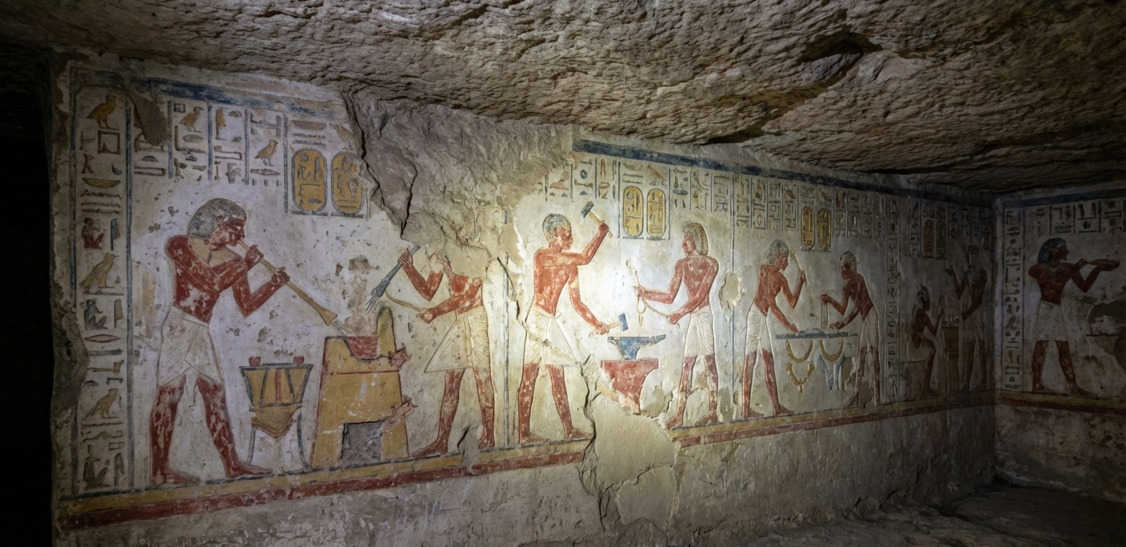
The Tomb of Iymery was first discovered in 1925 by archaeologist George Reisner during excavations at Giza, though it only opened to the public 90 years later after extensive restoration work that began in 2010. When the German Egyptologist Lepsius entered the tomb in the 19th century, he named it the 'Tomb of Trades' because of its colorful painted reliefs depicting many industrial scenes.
The tomb quickly became popular with travelers in the 19th century, many of whom unfortunately carved their names on its walls. Today, it stands as one of the most important examples of Fifth Dynasty funerary architecture and decoration.
Architectural Marvel and Artistic Splendor
Structure and Layout
The Tomb of Iymery contains five chambers and a crypt, all carved into solid bedrock. The structure showcases the advanced engineering capabilities of ancient Egyptian architects, with a labyrinthine network of corridors and chambers designed to serve both functional and symbolic purposes.
The entrance on the eastern side features steps leading down into a vestibule decorated with beautiful and important scenes of craftsmen at work. An entrance passage leads to a long rectangular hall with three openings into a serdab chamber, a sealed room that once housed statues of the deceased.
The "Tomb of Trades" Reliefs
What makes the Tomb of Iymery truly exceptional is its vibrant and detailed wall decorations. The walls are inscribed with colorful images of carpenters, craftsmen, goldsmiths, jewellers, and sculptors at work. These scenes provide invaluable insights into ancient Egyptian industrial processes and daily activities.
The reliefs depict:
Food Production: Scenes of food production on the west wall include the brewing of beer in all its stages, winemaking, and various agricultural activities.
Agricultural Life: Well-preserved scenes show farming, fowling, and animal husbandry, capturing the essence of Nile Valley life 4,600 years ago.
Entertainment: The funeral banquet is depicted with male musicians entertaining guests while Iymery is seated in his chair.
Family Connections: Iymery is shown with his father Shepseskafankh and other family members, including his son Neferbauptah.
Religious Significance and Symbolism
The Tomb of Iymery wasn't simply a burial place but a sacred space designed to facilitate the deceased's journey to the afterlife. In ancient Egyptian belief, death marked a transition to eternal life, and every element of tomb decoration served a spiritual purpose.
As a high priest, Iymery possessed a unique connection to the divine realm. High priests were not only spiritual advisors but also custodians of the divine rituals that maintained cosmic order and were believed to bring prosperity through the annual inundation of the Nile River.
The tomb's elaborate decorations were intended to:
- Guide the deceased through the afterlife
- Ensure rebirth into eternal existence
- Preserve both the physical remains and spiritual essence
- Serve as a repository of cultural narratives
Unlike the grand monuments built for pharaohs, the tomb of a high priest such as Iymery was designed with a dual purpose: to honor the divine connection of the individual and to serve as a repository of cultural narratives.
The Family Necropolis
The Tomb of Iymery is part of the G6000 complex in the Western Cemetery, which centers on four large mastabas built by Iymery's family. This family complex demonstrates how powerful officials maintained their status across generations.
The tomb of Neferbauptah, the eldest of six sons of Iymery, has also undergone recent restoration and is open to visitors. Neferbauptah served as a high priest to multiple pharaohs, including Khufu, Sahure, Neferirkare, and Niuserre.
Visiting the Tomb of Iymery
Location and Accessibility
The Tomb of Iymery is located in the Western Cemetery at Giza, specifically in the southwestern corner of the ancient necropolis. It sits near other significant mastaba tombs from the Old Kingdom period.
Tombs in the Western field are often opened on request by the guards, though photography is no longer allowed inside any of the tombs. The tomb is part of the rotating selection of monuments accessible with a Giza Plateau ticket.
What to Expect
Visitors descending into the Tomb of Iymery are transported back 4,600 years. The silence of the ancient corridors, combined with the vibrant murals that have miraculously survived millennia, creates an atmosphere that is both haunting and awe-inspiring.
The preservation of colors and details in many of the reliefs is remarkable, particularly given the tomb's age. The craftsmanship scenes are especially detailed, showing ancient Egyptians engaged in metalworking, woodworking, and various artistic pursuits.
Modern Exploration and Conservation
The Tomb of Iymery has captured renewed attention in recent years. While the tomb remains largely inaccessible to protect its fragile murals, modern technology is preserving its legacy through digital imaging and 3D scans.
Conservation efforts have been critical to preserving this ancient treasure. The restoration work that began in 2010 included installing proper lighting and creating pathways for visitors, while ensuring that the delicate wall paintings would not be damaged by modern foot traffic or environmental factors.
Digital documentation projects, like those undertaken by the Digital Giza initiative at Harvard University, have created comprehensive records of the tomb's architecture, inscriptions, and artwork. These digital archives ensure that even if the physical tomb deteriorates over time, its historical and artistic value will be preserved for future generations.
Archaeological Importance
The Tomb of Iymery holds tremendous value for Egyptologists and archaeologists. The detailed scenes provide critical information about:
Daily Life: The industrial scenes show tools, techniques, and processes used in ancient Egyptian craftsmanship, offering insights that complement textual sources.
Social Structure: The tomb reveals the hierarchy within wealthy families and the relationship between nobles and the royal court.
Religious Practices: The funerary rituals and offering scenes illuminate Old Kingdom religious beliefs and practices surrounding death and the afterlife.
Artistic Development: The quality and style of the reliefs help scholars track the evolution of Egyptian art during the Fifth Dynasty.
Why the Tomb of Iymery Matters Today
In a landscape dominated by the towering pyramids, the Tomb of Iymery represents a different but equally important aspect of ancient Egyptian civilization. While pyramids showcase the power and ambition of pharaohs, mastaba tombs like Iymery's reveal the lives, beliefs, and achievements of the elite officials who actually ran the Egyptian state.
The detailed wall paintings and inscriptions provide a vivid record of everyday practices, from religious rituals to mundane tasks, revealing insights into the beliefs and daily life that define an entire civilization.
The tomb stands as a testament to ancient Egypt's artistic achievements, religious depth, and the enduring human desire to be remembered. Every carved relief and painted scene was created with the belief that it would serve a purpose in eternity, ensuring Iymery's continued existence in the afterlife.
Planning Your Visit
For travelers interested in exploring the Tomb of Iymery:
Best Time to Visit: Early morning hours are ideal to avoid crowds and heat. The Giza Plateau is open daily, but specific tomb access may vary.
What to Bring: Comfortable walking shoes are essential, as you'll be navigating uneven ancient pathways. While photography is restricted inside the tomb, you can capture the exterior and surrounding areas.
Combining Your Visit: The Tomb of Iymery can be explored alongside other Western Cemetery mastabas and, of course, the nearby pyramids and Sphinx. Consider also visiting the tomb of Meresankh III in the Eastern Cemetery for comparison.
Guided Tours: A knowledgeable guide can significantly enhance your experience by explaining the symbolism in the reliefs and the historical context of Iymery's life and times.
Conclusion
The Tomb of Iymery stands as one of ancient Egypt's hidden masterpieces. While it may not possess the monumental scale of the nearby pyramids, it offers something equally precious: an intimate glimpse into the spiritual beliefs, artistic achievements, and daily realities of life along the Nile 4,600 years ago.
From its vibrant scenes of craftsmen at work to its sophisticated religious symbolism, the tomb reveals the complexity and richness of Old Kingdom Egyptian society. As modern conservation techniques and digital documentation continue to preserve this ancient treasure, the Tomb of Iymery ensures that the legacy of its occupant—and the civilization he served—will endure for millennia to come.
For anyone seeking to understand ancient Egypt beyond its most famous monuments, the Tomb of Iymery offers an unparalleled opportunity to step into the past and experience the artistry, spirituality, and humanity of one of history's greatest civilizations.
