
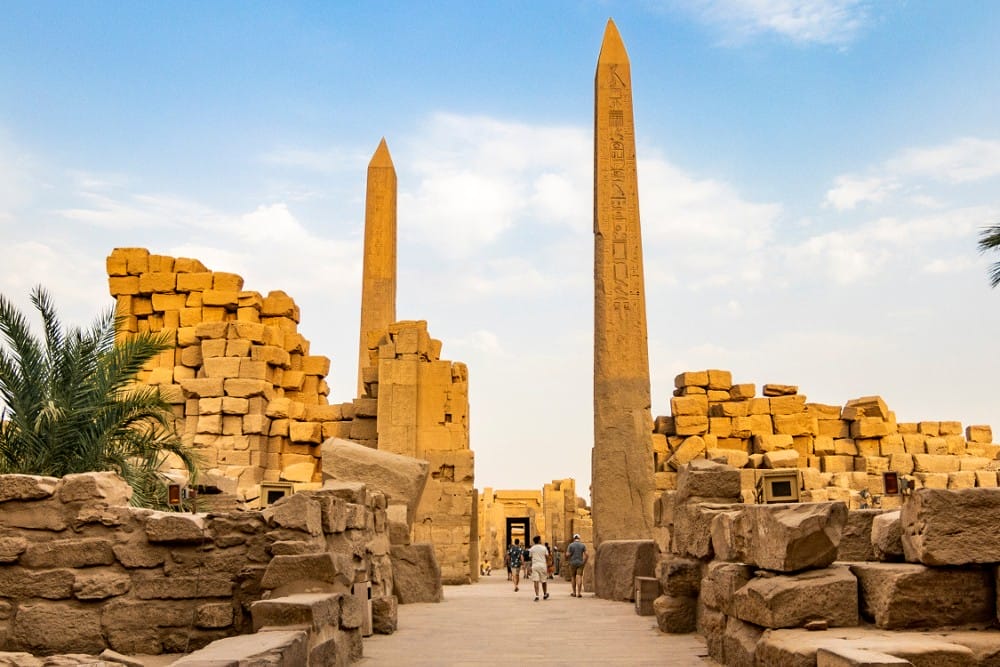
Hatshepsut Obelisk: The Powerful Monument
The Hatshepsut obelisk stands as one of the most remarkable achievements of ancient Egyptian architecture. Rising proudly within the sacred temple complex of Karnak Temple Complex in Luxor, this towering monument reflects the ambition, power, and divine authority of one of Egypt’s greatest rulers, Hatshepsut.
Today, the obelisk of Queen Hatshepsut remains a must-see landmark for visitors exploring Upper Egypt, offering insight into ancient engineering, religion, and royal propaganda. In this guide, we explore the history, significance, and location of the Queen Hatshepsut monument, with a special focus on the famous Karnak obelisk.
Who Was Queen Hatshepsut?
Before understanding the Hatshepsut obelisk, it’s important to know the woman behind it. Queen Hatshepsut ruled during the 18th Dynasty (around 1479–1458 BCE) in the New Kingdom period. She is widely regarded as one of the most successful female pharaohs in Egyptian history.
Unlike many royal women before her, Hatshepsut declared herself Pharaoh and adopted full kingly titles. She even depicted herself wearing the traditional false beard and male regalia to legitimize her rule.
Her reign was marked by peace, prosperity, and monumental construction projects, including temples, trade expeditions, and, of course, the famous obelisk of Queen Hatshepsut.
What Is the Hatshepsut Obelisk?
The Hatshepsut obelisk is a massive red granite monument carved from a single block of stone. It was quarried in Aswan and transported over 200 kilometers to Karnak. Standing approximately 29.5 meters (97 feet) tall, it remains one of the tallest surviving ancient obelisks in Egypt.
This extraordinary Queen Hatshepsut monument was erected to honor the god Amun-Ra, the chief deity worshipped at Karnak. The inscriptions carved into its sides praise Amun and proclaim Hatshepsut’s divine right to rule.
Location: The Karnak Obelisk in Luxor
The Karnak obelisk is located within the Temple of Amun at the vast Karnak Temple Complex on the east bank of the Nile in Luxor. Karnak itself is one of the largest religious sites ever built in the ancient world.
Hatshepsut originally erected two obelisks at Karnak, but today only one remains fully standing. The other was later damaged and partially dismantled.
Visitors exploring Luxor often combine a visit to Karnak with trips to:
-
Valley of the Kings
-
Temple of Hatshepsut
-
Luxor Temple
Together, these monuments tell the story of Egypt’s golden age.
Why Did Hatshepsut Build the Obelisk?
The obelisk of Queen Hatshepsut was more than just a decorative structure. It served several important purposes:
1. Religious Devotion
Obelisks were sacred symbols associated with the sun god Ra. By erecting the Hatshepsut obelisk at Karnak, she demonstrated her devotion to Amun-Ra, strengthening her religious legitimacy.
2. Political Power
As a female ruler in a male-dominated society, Hatshepsut needed to reinforce her authority. The towering height and grand scale of the Queen Hatshepsut monument symbolized her strength and divine support.
3. Legacy and Immortality
Like many Egyptian pharaohs, Hatshepsut sought eternal remembrance. Monumental architecture was a way to secure immortality in the afterlife and ensure her name would endure through history.
Engineering Marvel of the Hatshepsut Obelisk
One of the most fascinating aspects of the Hatshepsut obelisk is the engineering behind it.
The granite was quarried from Aswan, likely using dolerite pounding stones. Workers carefully separated the stone from bedrock without cracking it—a remarkable feat considering its massive size.
After quarrying, the obelisk was transported via the Nile River on specially constructed barges. The journey required precise planning and coordination.
Once at Karnak, workers raised the obelisk into position using ramps, ropes, and manpower. The entire project reportedly took only seven months—an astonishing achievement for ancient times.
The Inscriptions on the Karnak Obelisk
The sides of the Karnak obelisk are covered in hieroglyphic inscriptions. These texts praise Amun-Ra and highlight Hatshepsut’s divine birth and rightful kingship.
The inscriptions also mention that the obelisk was covered in electrum (a mixture of gold and silver), which made it shine brilliantly in the sunlight. This dazzling effect symbolized the sun’s rays touching the earth.
Through these carvings, the obelisk of Queen Hatshepsut became both a religious offering and a political statement.
Attempt to Erase Hatshepsut’s Legacy
After Hatshepsut’s death, her successor (likely Thutmose III) attempted to erase her from history. Many statues and inscriptions bearing her name were defaced or hidden.
Interestingly, the Hatshepsut obelisk was not destroyed but partially enclosed within a wall. Some historians believe this was done to preserve the monument while still minimizing her visibility.
Despite these efforts, the Queen Hatshepsut monument survived and remains one of the best-preserved obelisks from ancient Egypt.
Visiting the Hatshepsut Obelisk Today
Today, the Hatshepsut obelisk is one of the top highlights for travelers visiting Luxor. Standing beneath its towering height gives visitors a sense of awe and admiration for ancient craftsmanship.
Travel Tips:
-
Visit early in the morning or late afternoon for cooler temperatures.
-
Hire a licensed guide to understand the detailed inscriptions.
-
Combine your visit with other nearby historical sites in Luxor.
Luxor is often called the “world’s greatest open-air museum,” and the Karnak obelisk is a shining example of why.
The Symbolism of Obelisks in Ancient Egypt
Obelisks were not unique to Hatshepsut. Many pharaohs erected them, including those at Heliopolis and Karnak.
However, the obelisk of Queen Hatshepsut stands out due to its size, preservation, and historical significance. It symbolizes:
-
Divine authority
-
Solar power
-
Royal legitimacy
-
Architectural brilliance
As a Queen Hatshepsut monument, it represents the height of New Kingdom ambition and artistic achievement.
Why the Hatshepsut Obelisk Still Matters
The Hatshepsut obelisk is more than a stone pillar—it is a symbol of female leadership, resilience, and vision.
In a time when few women ruled major civilizations, Hatshepsut proved that power and capability were not limited by gender. Her monument at Karnak continues to inspire scholars, travelers, and history enthusiasts worldwide.
For anyone exploring Egypt’s ancient treasures, the Karnak obelisk remains an unforgettable highlight and a testament to one of history’s most extraordinary queens.
Final Thoughts
The Hatshepsut obelisk, also known as the obelisk of Queen Hatshepsut, is one of Egypt’s most iconic monuments. Located within the magnificent Karnak Temple Complex in Luxor, this towering structure showcases the ambition and devotion of Queen Hatshepsut.
As a lasting Queen Hatshepsut monument, it connects modern visitors with the spiritual, political, and architectural genius of ancient Egypt. Whether you are a history lover, a traveler planning your next trip to Luxor, or an SEO enthusiast researching Egyptian landmarks, the Karnak obelisk stands as a timeless reminder of Egypt’s glorious past.
If you planning to visit Luxor, don’t miss the opportunity to stand beneath the Hatshepsut obelisk and witness one of the most powerful symbols of ancient Egyptian civilization.
FAQ About the Hatshepsut Obelisk
What is the Hatshepsut obelisk?
The Hatshepsut obelisk is a massive red granite monument erected by Hatshepsut during the 18th Dynasty. It was built to honor the god Amun-Ra and to reinforce her divine authority as pharaoh.
Where is the obelisk of Queen Hatshepsut located?
The obelisk of Queen Hatshepsut stands inside the Karnak Temple Complex in Luxor, on the east bank of the Nile River.
How tall is the Karnak obelisk of Hatshepsut?
The Karnak obelisk rises approximately 29.5 meters (97 feet) high, making it one of the tallest surviving obelisks in Egypt.
Why did Queen Hatshepsut build the monument?
This Queen Hatshepsut monument was built as a religious offering to Amun-Ra and as a political statement to legitimize her rule as a female pharaoh.
Can tourists visit the Hatshepsut obelisk today?
Yes, visitors can see the Hatshepsut obelisk when touring Karnak Temple in Luxor. It remains one of the top highlights of any trip to Upper Egypt.
