
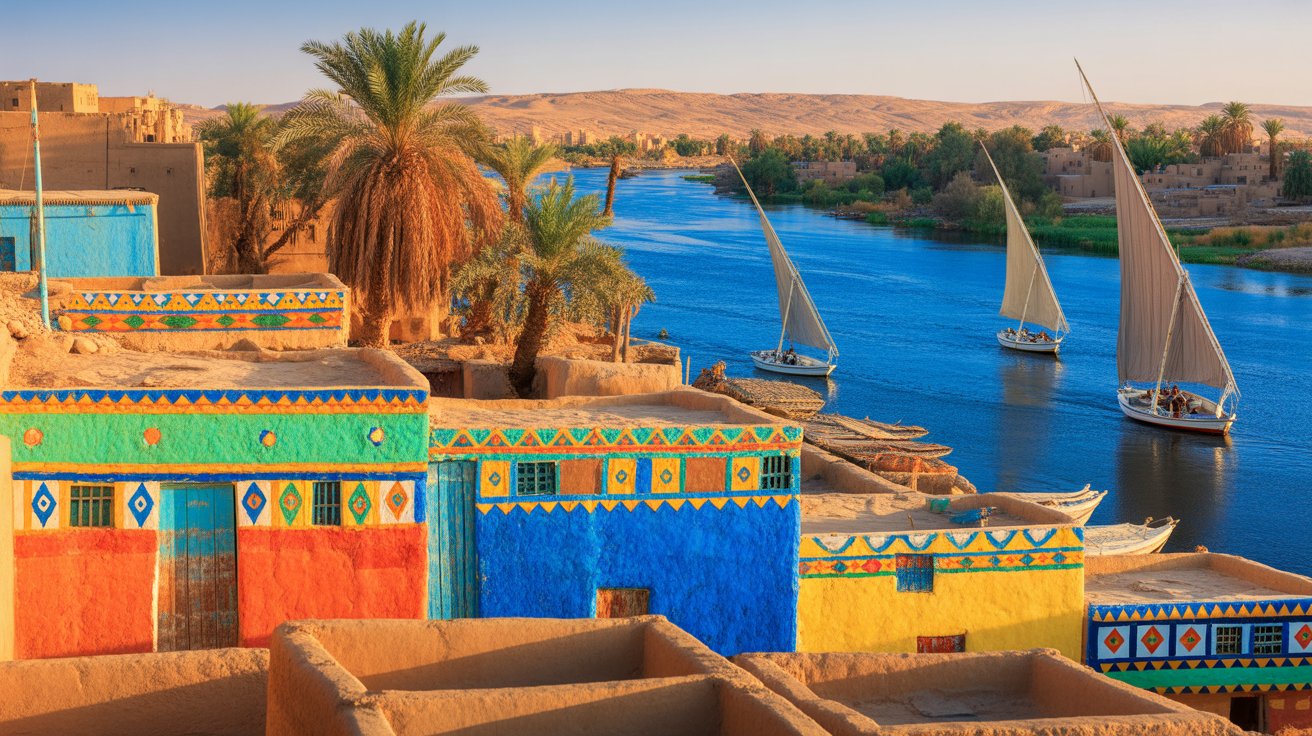
Nubian Village in Aswan: Colorful Cultural Experience
Nestled along the western banks of the Nile River in southern Egypt, the Nubian Village in Aswan offers travelers an extraordinary glimpse into one of Africa's oldest living cultures. With its vibrant rainbow-colored houses, warm hospitality, and rich traditions spanning over 8,000 years, visiting a Nubian village should be at the top of your Aswan itinerary.
What Makes the Nubian Village in Aswan So Special?
The Nubian villages near Aswan are far more than just a photogenic destination. These communities represent the living heritage of the Nubian people, descendants of one of Africa's oldest civilizations who settled along the Nile over 8,000 years ago. Despite displacement caused by the construction of the Aswan High Dam in the 1960s, Nubians have preserved their unique language, customs, music, and architectural traditions.
What sets the Nubian Village apart is its striking visual appeal. Houses are constructed from clay mud and painted in brilliant colors including blue, yellow, and pink, decorated with traditional patterns that reflect Nubian culture. The curved dome architecture and hand-painted exteriors create a photographer's paradise unlike anywhere else in Egypt.
But the true magic lies in the people themselves. Nubians are renowned for their exceptional hospitality, often welcoming visitors with food or drink and sharing stories about their ancestors to keep their rich cultural heritage alive.
Where Are the Nubian Villages Located?
The Nubian Villages are situated on the west bank of the Nile River in Aswan, primarily on Elephantine Island and Soheil Island, approximately 5-10 kilometers south of Aswan city. The most famous village accessible to tourists is Gharb Soheil, which lies just a short boat ride from Aswan's city center.
How to Get to the Nubian Village from Aswan
Reaching the Nubian Village is an adventure in itself. From Aswan, you can take a felucca (traditional sailboat) or motorboat ride across the Nile River, enjoying stunning views of the Nile and colorful Nubian architecture during the journey.
The boat ride typically takes 20-30 minutes and departs from Aswan's Corniche or from docks near the city center. Boat rides can be arranged from the ferry port near McDonald's in Aswan, with prices ranging from 300-400 Egyptian Pounds, though negotiation is recommended.
Many Nile River cruises include stops at Nubian villages as part of their itinerary, offering a convenient way to experience this unique destination.
Top Things to Do in the Nubian Village Aswan
1. Explore the Rainbow-Colored Streets
Walking through the village feels like stepping into a living art gallery. The vibrant houses with their distinctive curved domes and colorful facades create endless photo opportunities. Every corner reveals new artistic details, from intricate wall paintings to creative decorations.
2. Visit a Traditional Nubian Home
Tour a local Nubian home to admire traditional architecture, furniture, and artwork while learning about the daily lives of residents. Many families welcome visitors into their homes, offering authentic hibiscus tea and sharing insights into Nubian customs and traditions.
3. Shop at the Nubian Souk
The local marketplace bursts with colorful handicrafts, textiles, spices, and traditional Nubian accessories. Popular souvenirs include Nubian-themed bags, clothes, and accessories bearing traditional symbols, as well as authentic spices like cumin, cinnamon, curry, and various teas. These markets provide an excellent opportunity to support local artisans directly.
4. Get Traditional Henna Art
Local Nubian women offer henna designs as part of wedding and celebration traditions, typically creating simple patterns on hands, wrists, or feet for around 70 Egyptian Pounds. The designs last about a week and make for a meaningful cultural souvenir.
5. Experience Nubian Cuisine
Savor authentic Nubian dishes at local restaurants with stunning Nile views. Traditional Nubian cuisine features fresh ingredients and simple flavors, with popular dishes including fresh Nile fish, lentil soup, okra stew, and homemade bread. Many tours include a home-cooked meal with a local family, offering an intimate taste of Nubian hospitality.
6. Learn About Nubian Culture and Traditions
Some villages offer classroom experiences where Nubian teachers share basic Arabic and Nubian numbers and phrases with visitors. This educational component provides valuable insight into the Nubian language, which is primarily passed down orally rather than in written form.
7. Enjoy Nubian Music and Dance
Nubians are known for their cheerful songs and dances, which signify happiness and celebration. Many guesthouses and cultural centers host Nubian music nights where visitors can experience traditional performances and even join in the festivities.
8. Spot the Symbolic Crocodiles
Crocodiles appear throughout the village as both live animals and artistic representations, serving as protective symbols against the evil eye according to ancient Egyptian beliefs. While some houses keep crocodiles in open-air enclosures, visitors should note that animal welfare practices vary.
Best Nubian Village Tours and Experiences
Several tour options allow you to experience the Nubian Village:
Half-Day Tours: Perfect for travelers on a tight schedule, these typically include motorboat transportation, village walking tour, and tea with a local family.
Full-Day Cultural Tours: More comprehensive experiences that may include cooking classes, traditional music sessions, and extended time to interact with locals.
Nile Cruise Stops: Many Luxor-to-Aswan cruises incorporate Nubian Village visits into their itineraries, combining the experience with other Aswan attractions.
Homestay Experiences: For the most authentic experience, staying overnight in a Nubian guesthouse allows you to immerse yourself fully in local life. Popular options include Kato Waidi Nubian House and La Wanda guesthouse, offering traditionally decorated accommodations with Nile views.
When is the Best Time to Visit the Nubian Village?
The most pleasant temperatures occur between October and April, making these months ideal for exploring the village and surrounding area. During Egypt's hot summer months (May-September), visiting early in the morning or late afternoon provides more comfortable conditions.
What Else to See in Aswan
While in Aswan, consider combining your Nubian Village visit with these nearby attractions:
- Philae Temple: An ancient temple dedicated to the goddess Isis, relocated to Agilkia Island to save it from flooding
- Aswan High Dam: The massive engineering project that created Lake Nasser and led to the Nubian relocations
- Nubian Museum: A comprehensive museum showcasing Nubian art, history, and cultural artifacts
- Unfinished Obelisk: An archaeological site revealing ancient Egyptian stone-cutting techniques
- Elephantine Island: The largest island at Aswan with archaeological ruins and the Aswan Museum
- Botanical Garden (Kitchener's Island): A lush garden featuring tropical and subtropical plants
Practical Tips for Visiting the Nubian Village
Respect Local Customs: While Nubians are welcoming, dress modestly and always ask permission before photographing people or entering homes.
Bring Cash: Many small shops and boat operators don't accept cards. Egyptian pounds are essential for purchases and transportation.
Learn Basic Phrases: A few words in Arabic or Nubian go a long way in showing respect and building connections with locals.
Stay Hydrated: Aswan's climate is hot and dry. Bring water and sun protection.
Negotiate Fairly: While bargaining is expected in markets, remember to negotiate respectfully and pay fair prices that support the local community.
Support Local Businesses: Purchase directly from artisans, eat at family-run restaurants, and consider staying in locally-owned guesthouses to ensure your tourism dollars benefit the community.
The Cultural Significance of Nubian Villages
The Nubian villages represent resilience and cultural preservation. When the Aswan High Dam was constructed in the 1960s, many original Nubian villages were flooded, prompting the Egyptian government to resettle Nubian people in new locations to preserve their culture and traditions.
Today, with a population that doesn't exceed 100,000, Nubians continue to maintain their distinct identity. They speak Nubian languages, celebrate unique traditions, and practice customs that differ from the rest of Egypt. Their African and Sudanese origins are reflected in their music, art, and community values.
The famous Egyptian singer Mohamed Mounir, known as "The King," hails from Nubia, and many of his songs are written in the Nubian language, helping to preserve and promote Nubian culture throughout Egypt and beyond.
Is the Nubian Village Worth Visiting?
Absolutely. Visiting the Nubian Village in Aswan offers a rare opportunity to connect with living history and experience genuine cultural exchange. Unlike the ancient monuments that dominate most Egyptian itineraries, the Nubian villages allow you to interact with real people who are actively preserving their heritage.
The combination of stunning visual beauty, authentic cultural experiences, warm hospitality, and delicious cuisine makes this one of the most memorable experiences in southern Egypt. Whether you spend a few hours or stay overnight, the Nubian Village provides a refreshing contrast to Egypt's more tourist-heavy destinations.
Final Thoughts
The Nubian Village in Aswan is more than just a colorful backdrop for Instagram photos—it's a living testament to cultural resilience and the enduring spirit of the Nubian people. By visiting respectfully and supporting local businesses, travelers can help ensure this remarkable culture continues to thrive for generations to come.
Plan your visit to the Nubian Village and discover why this rainbow-colored community along the Nile has captured the hearts of travelers from around the world. The warm smiles, vibrant colors, and rich traditions await you just a short boat ride from Aswan.
Ready to experience Nubian culture? Book your Aswan trip today and add the Nubian Village to your Egypt itinerary for an unforgettable cultural adventure.
