
Ancient Egyptian Architecture: From Pyramids to Homes
Ancient Egypt stands as one of history's most fascinating civilizations, renowned for architectural achievements that continue to captivate us millennia later. While the pyramids and temples dominate our imagination, the full story of Egyptian ancient architecture reveals a sophisticated society where every structure from royal monuments to humble ancient Egyptian dwellings reflected the ingenuity and values of this remarkable culture.
Understanding Ancient Egyptian Architecture
Architecture in ancient Egypt was far more than construction it was a reflection of religious beliefs, social hierarchy, and the rhythm of life in ancient Egypt. The Egyptians developed architectural techniques that would influence civilizations for thousands of years, creating structures designed not just for the living, but for eternity.
The Ancient Egyptians believed in the concept of Ma'at cosmic order and balance which influenced every aspect of their building practices. Structures were oriented to celestial bodies, proportioned according to sacred geometry, and built with materials chosen for both practical and symbolic purposes.
Egyptian Homes Ancient: Where Daily Life Unfolded
While monumental architecture captures headlines, understanding egyptian homes ancient gives us intimate insight into how ordinary people actually lived. The design of dwellings varied dramatically based on social class, location, and the ancient egypt occupations of their inhabitants.
Homes of Common Workers
Most Egyptians lived in modest homes constructed from sun-dried mud bricks, a readily available and practical building material in the Nile Valley. These ancient Egyptian dwellings were typically small, consisting of three or four rooms arranged around a central living area. Flat roofs served as additional living space during cooler evening hours, where families would sleep under the stars.
The thick mud-brick walls provided excellent insulation against Egypt's extreme temperatures, keeping interiors cool during scorching days and retaining warmth during chilly desert nights. Small, high windows minimized heat gain while allowing light and ventilation. Floors were usually packed earth, sometimes covered with reed mats.
Middle-Class and Artisan Homes
Skilled craftspeople and those in specialized ancient egypt occupations enjoyed more spacious dwellings. These homes might include a reception area for conducting business, separate sleeping quarters, a kitchen with a clay oven, and even a rooftop terrace. Some featured small courtyards that brought light into interior spaces and provided areas for domestic activities like cooking, weaving, and food preparation.
Archaeological excavations at Deir el-Medina, the village of workers who built the Valley of the Kings, reveal well-preserved examples of these middle-tier homes. These ancient Egyptian dwellings demonstrate sophisticated urban planning, with houses built in organized rows along narrow streets.
Elite and Noble Residences
Wealthy Egyptians and high officials lived in sprawling estates that showcased the pinnacle of residential architecture. These grand homes featured multiple stories, numerous rooms, columned halls, extensive gardens with pools, and separate quarters for servants. Walls were often plastered and decorated with colorful paintings depicting nature scenes, geometric patterns, and daily activities.
These elite egyptian homes ancient included sophisticated amenities like bathrooms with drainage systems, wine cellars, and granaries for storing provisions. The homes were designed to impress visitors and demonstrate the owner's wealth and status in Egyptian society.
Monumental Architecture: Building for Eternity
The architectural genius of ancient Egypt shines brightest in its monumental structures—temples, pyramids, and tombs that have survived millennia.
The Pyramids: Engineering Marvels
The pyramids represent the apex of ancient Egyptian architecture and engineering. The Great Pyramid of Giza, built for Pharaoh Khufu around 2560 BCE, originally stood 481 feet tall and consisted of approximately 2.3 million stone blocks, each weighing between 2.5 and 15 tons.
Creating these structures required not only advanced architectural knowledge but also sophisticated project management. Various ancient egypt occupations contributed to pyramid construction: architects designed the structures, engineers calculated angles and dimensions, quarrymen extracted limestone and granite, transporters moved massive blocks using sledges and ramps, and thousands of workers assembled the stones with remarkable precision.
The evolution of pyramid design—from Djoser's Step Pyramid to the true pyramids at Giza demonstrates centuries of architectural experimentation and refinement.
Temples: Houses of the Gods
Egyptian temples represented microcosms of creation itself. These sacred structures followed a standardized layout that guided worshippers from the chaos of the outside world into increasingly sacred spaces culminating in the holy sanctuary.
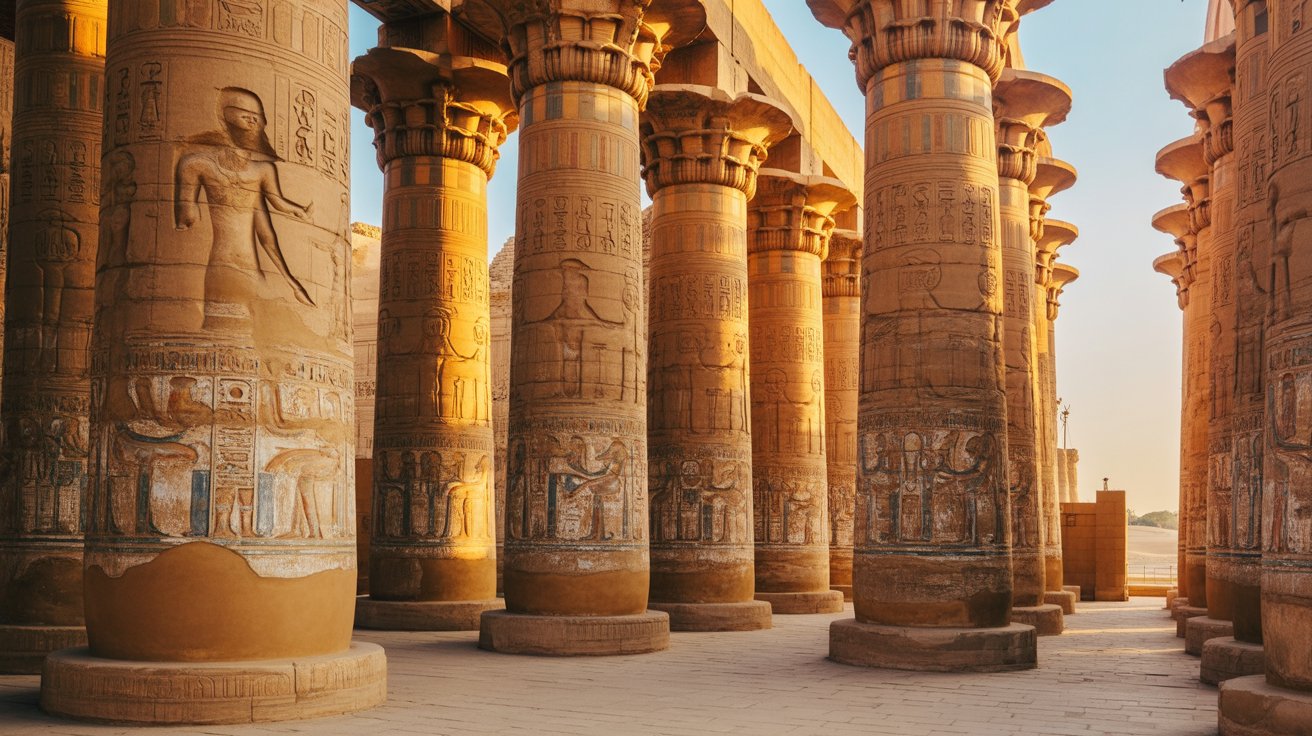
The Temple of Karnak, dedicated to Amun-Ra, exemplifies the grandeur of religious architecture. Its Great Hypostyle Hall contains 134 massive columns arranged in 16 rows, with the central columns reaching 69 feet high. Walking through this forest of stone, decorated with intricate hieroglyphs and reliefs, visitors experienced the power and mystery of the divine.
Temple architecture incorporated specific elements: massive pylons (monumental gateways) flanked by obelisks and statues, open courtyards for public gatherings, hypostyle halls with towering columns, and the inner sanctuary accessible only to pharaohs and high priests.
Tombs and Mortuary Architecture
Given the Egyptian obsession with the afterlife, tomb architecture received extraordinary attention. Early mastaba tombs evolved into pyramids for royalty, while later pharaohs opted for rock-cut tombs in the Valley of the Kings, designed to be hidden from tomb robbers.
These underground complexes featured elaborate decorative programs depicting the journey through the afterlife, religious texts, and scenes from life in ancient egypt. The architecture was designed to protect the deceased and provide everything needed for eternal existence.
Ancient Egypt Occupations in Architecture and Construction
The creation of these architectural marvels required a vast workforce with diverse skills. Ancient egypt occupations related to building included:
Architects and Engineers: Master builders who designed structures and calculated dimensions. These highly educated individuals understood mathematics, astronomy, and sacred geometry.
Stonemasons and Quarrymen: Skilled workers who extracted, shaped, and finished stone blocks with copper tools and wooden mallets.
Sculptors and Artists: Craftspeople who carved reliefs, painted walls, and created decorative elements that brought architecture to life.
Carpenters: Specialists who created scaffolding, ramps, sledges for transporting stones, and wooden architectural elements.
Laborers: Seasonal workers, often farmers during the Nile's flood season, who provided the massive workforce needed for large projects.
Scribes and Administrators: Record-keepers who tracked materials, managed workers, and documented construction progress.
Far from being slave labor, evidence suggests these workers were paid employees who took pride in their contributions to monumental projects. Workers' villages like Deir el-Medina show that laborers received rations of grain, beer, and other goods, enjoyed days off for festivals, and could even strike for better conditions.
Materials and Construction Techniques
Egyptian ancient architecture relied on locally available materials used with remarkable ingenuity.
Stone
For permanent structures intended to last forever, Egyptians used stone. Limestone, quarried from Tura and other sites along the Nile, provided the primary building material for pyramids and temples. Granite from Aswan, much harder and more durable, was reserved for special architectural elements like obelisks, sarcophagi, and doorways. Sandstone became popular during the New Kingdom for temple construction.
Egyptian masons achieved extraordinary precision without modern tools. They used copper chisels, wooden wedges, and pounding stones to shape blocks. Surveyors employed tools like the merkhet (similar to an astrolabe) and plumb bobs to ensure perfect alignment with cardinal directions and celestial bodies.
Mud Brick
For everyday ancient Egyptian dwellings and even palace structures, sun-dried mud brick provided the ideal material. Made from Nile mud mixed with straw and sand, then shaped in wooden molds and dried in the sun, these bricks were inexpensive, readily available, and well-suited to Egypt's climate.
Mud-brick architecture has deteriorated over millennia, which is why fewer examples survive compared to stone monuments. However, archaeological sites reveal that even mud-brick buildings could be quite sophisticated, with vaulted ceilings, multiple stories, and plastered, painted surfaces.
Wood
Scarce in Egypt, wood was imported from Lebanon and other regions for special purposes: roof beams, doors, furniture, and architectural details. The expense of wood meant it was used sparingly and primarily in elite egyptian homes ancient and royal structures.
Architectural Features and Design Elements
Several distinctive features characterize Egyptian ancient architecture:
Columns: Egyptian columns evolved through various styles—lotus-bud, papyrus-bundle, and palm-leaf capitals each symbolized important plants from the Nile Valley. These weren't just decorative; they represented the natural world and Egypt's agricultural foundation.
Hypostyle Halls: Rooms filled with numerous columns created forests of stone that evoked the primordial swamp from which Egyptians believed creation emerged.
Pylons: Massive sloped gateways that flanked temple entrances symbolized the horizon where the sun rose and set, reinforcing temples' cosmic significance.
Obelisks: Tall, four-sided monuments tapering to pyramidal tops represented rays of the sun and honored solar deities. Carved from single pieces of granite, transporting and erecting these monuments required extraordinary engineering.
Corbelled Vaults and Arches: While true arches were known, Egyptians preferred corbelled vaults overlapping layers of stone or brick that created ceiling curves.
Life in Ancient Egypt Through Architecture
Architecture reveals much about life in ancient egypt and social organization. The stark contrast between monumental stone temples and modest mud-brick dwellings illustrates the rigid social hierarchy. Yet both types of structures show sophisticated understanding of climate, materials, and human needs.
Religious architecture dominated the landscape and economy, demonstrating the centrality of religious beliefs to Egyptian culture. Temples weren't just worship spaces—they were economic centers owning vast lands, employing thousands, and redistributing resources throughout society.
Residential architecture, meanwhile, shows how Egyptians adapted to their environment. Homes oriented to catch northern breezes, courtyards and rooftop spaces extended living areas, and thick walls moderated temperature extremes all practical responses to climate that made life in ancient egypt comfortable despite harsh conditions.
Urban Planning in Ancient Egypt
Egyptian cities displayed sophisticated urban planning. Planned workers' villages like Deir el-Medina and Kahun featured organized street grids, standardized house plots, and central facilities. These weren't organic medieval tangles but deliberately designed communities.
Major cities combined residential neighborhoods, temple complexes, administrative buildings, and commercial areas. However, since most structures were mud brick, few ancient cities remain intact. What survives suggests Egyptians understood principles of urban design: separating different functional areas, providing access to water, and creating public spaces.
Legacy and Influence
Egyptian ancient architecture influenced subsequent civilizations profoundly. Greek and Roman architects borrowed Egyptian columns, obelisks, and design principles. The Renaissance rediscovered Egyptian aesthetics, and the 19th-century discovery of tombs sparked Egyptian Revival movements in architecture and design.
Even today, the clean lines, monumental scale, and symbolic richness of ancient Egyptian architecture inspire contemporary architects and designers. The pyramids remain among history's most recognizable structures, testifying to the enduring power of Egyptian architectural achievement.
Conclusion: Architecture as Cultural Expression
From the grandest pyramid to the humblest dwelling, ancient Egyptian architecture tells the story of a civilization that sought to create order from chaos, to build for eternity, and to honor both gods and pharaohs through monumental construction. Egyptian homes ancient reveal how ordinary people lived, while temples and tombs demonstrate religious devotion and architectural ambition.
The diverse ancient egypt occupations required to create this architectural heritage from architects to laborers—show how construction projects organized society and provided purpose beyond mere survival. Understanding this architecture helps us appreciate not just Egyptian building techniques, but the values, beliefs, and daily realities of life in ancient egypt.
These structures weren't merely functional; they were profound expressions of how Egyptians understood their world, their place in the cosmos, and their relationship with the divine. Thousands of years later, Egyptian ancient architecture continues to inspire wonder, reminding us that truly great architecture transcends time and speaks to something universal in the human experience.
Whether studying the precise geometry of the pyramids, the intimate spaces of ancient Egyptian dwellings, or the overwhelming grandeur of temple complexes, we discover a civilization that elevated architecture to an art form one that continues to captivate and instruct us today.
