
The Sacred Scarab Beetle: Symbol of Transformation and Rebirth
The scarab beetle holds a unique place in human history as one of the most revered creatures of the ancient world. For thousands of years, this humble dung beetle captivated the imagination of Egyptian civilization, transforming from a simple insect into a powerful symbol of creation, resurrection, and the eternal cycle of life.
What is a Scarab Beetle?
The scarab beetle, scientifically known as Scarabaeus sacer, is a type of dung beetle found across the Mediterranean region and parts of Africa. These industrious insects are known for their distinctive behavior of rolling balls of dung across the ground, which they use as food sources and breeding chambers. Adult scarab beetles typically measure between 25-30 millimeters in length and display a characteristic metallic black or dark brown coloration.
Scarab Beetle Ancient Egypt: A Divine Connection
In ancient Egypt, the scarab beetle became one of the most significant religious and cultural symbols, particularly associated with the sun god Ra and the deity Khepri. The Egyptians observed these beetles rolling their dung balls from east to west, mirroring the sun's daily journey across the sky. This natural behavior inspired a profound spiritual interpretation that would influence Egyptian culture for millennia.
The god Khepri, often depicted as a man with a scarab beetle for a head, represented the morning sun and was believed to roll the sun across the sky each day, just as the beetle rolled its ball of dung. This association made the scarab a symbol of the sun's daily rebirth and the continuous cycle of creation.
Scarab Beetle Meaning: Symbolism and Significance
The scarab beetle meaning in ancient Egyptian culture extended far beyond a simple religious icon. These creatures embodied multiple layers of symbolism that touched every aspect of Egyptian spiritual life.
Rebirth and Resurrection: The most powerful scarab beetle meaning relates to transformation and renewal. Egyptians noticed that young beetles emerged from the dung balls seemingly by spontaneous generation, not understanding the complete life cycle. This mysterious appearance symbolized resurrection and the promise of life after death, making scarabs essential funerary symbols.
Protection: Scarab amulets were believed to offer magical protection to both the living and the dead. Egyptians wore scarab jewelry as talismans against evil forces and placed them in tombs to safeguard the deceased on their journey through the afterlife.
Creation and Existence: The scarab represented the concept of self-creation and existence. Just as Khepri was thought to create himself each morning, the scarab symbolized the creative forces of the universe and the power of transformation.
Good Fortune: Beyond spiritual matters, scarabs were considered lucky charms that brought prosperity, success, and positive energy to their owners.
Scarab Amulets and Artifacts
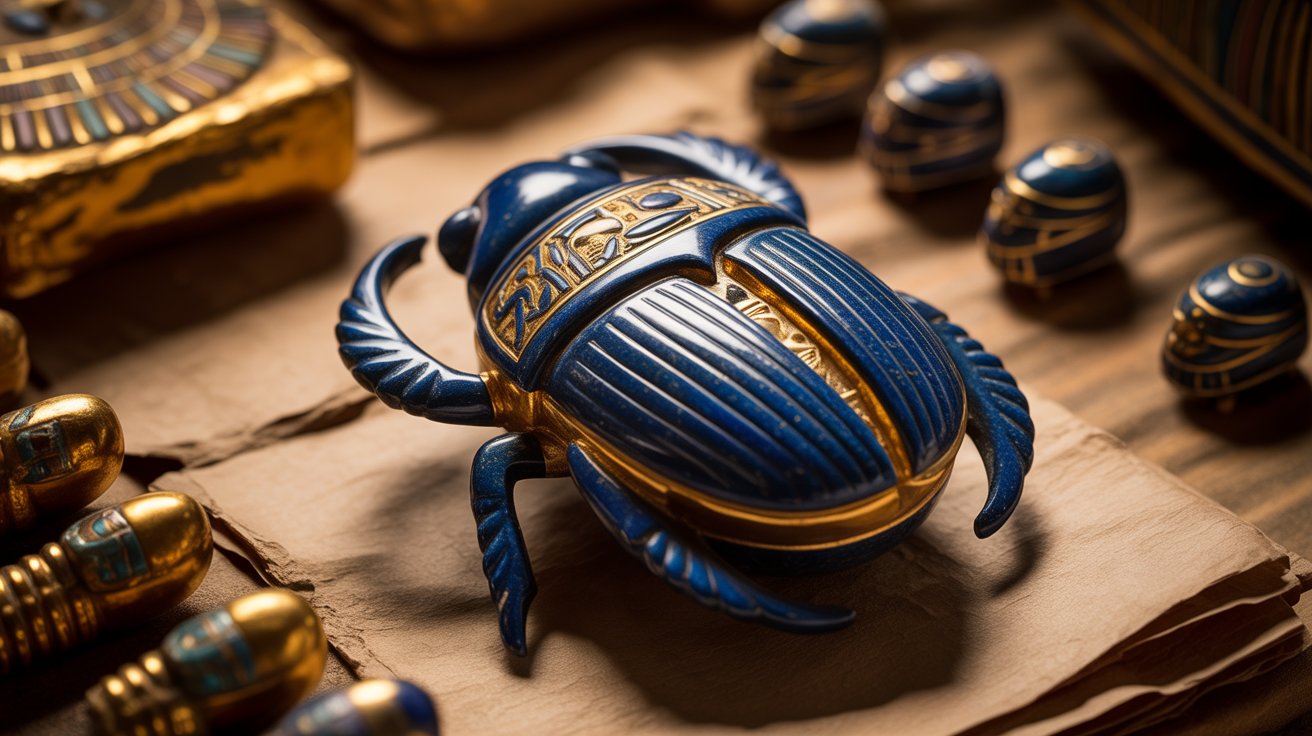
The reverence for scarab beetles in ancient Egypt manifested in countless artistic creations. Craftsmen fashioned scarab amulets from various materials including stone, faience (glazed ceramic), precious metals, and semi-precious gemstones like lapis lazuli, carnelian, and turquoise.
These amulets came in different forms and served various purposes. Heart scarabs, large beetle-shaped amulets, were placed on mummies' chests during burial. The flat undersides often bore inscriptions from the Book of the Dead, particularly spells to prevent the heart from testifying against the deceased during the judgment of the soul.
Seal scarabs functioned as both amulets and practical objects, featuring carved bases that served as official seals for documents and property. The carved surfaces displayed names, titles, decorative patterns, or religious inscriptions, making each scarab unique.
The Scarab in Modern Context
Today, the scarab beetle continues to fascinate people around the world. Museums display extensive collections of ancient scarab amulets, offering glimpses into Egyptian beliefs and artistry. The scarab has transcended its historical origins to become a universal symbol recognized in jewelry design, tattoo art, and popular culture.
Modern interpretations of scarab beetle meaning often focus on themes of personal transformation, resilience, and spiritual growth. Many people wear scarab jewelry not only for its aesthetic appeal but also to connect with its ancient symbolism of rebirth and positive change.
The Legacy of the Sacred Beetle
The enduring legacy of the scarab beetle ancient Egypt created demonstrates humanity's capacity to find profound meaning in the natural world. These industrious insects, through careful observation and spiritual interpretation, became vessels for some of civilization's deepest hopes and beliefs about life, death, and rebirth.
From humble dung beetle to divine symbol, the scarab's journey through history reminds us that transformation is possible and that even the smallest creatures can carry the weight of cosmic significance. Whether viewed through the lens of ancient spirituality or modern symbolism, the scarab beetle remains a powerful emblem of life's eternal cycles and the possibility of renewal that exists in every ending and beginning.
The scarab teaches us that what appears ordinary on the surface may contain extraordinary depth, and that by observing nature with wonder and imagination, we can discover meanings that transcend time and culture.
home
