
Ancient Egyptian civilization left behind a rich tapestry of symbols that continue to fascinate historians, archaeologists, and spiritual seekers today. Among these powerful emblems, the Was scepter stands out as one of the most significant symbols of divine authority and dominion in Egyptian culture.
What is the Was Scepter?
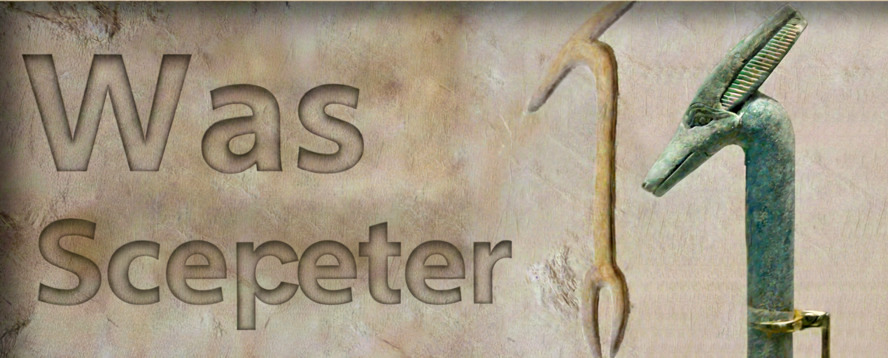
The Was scepter (also spelled "was staff" or "uas scepter") was a ceremonial staff carried by Egyptian gods and pharaohs, symbolizing power, dominion, and control over chaos. This iconic symbol features a distinctive design: a long shaft with a forked base and an animal head at the top, typically resembling the Set animal—a mysterious creature combining features of various animals.
Physical Description of the Was Scepter
The Was scepter typically measured between 1.5 to 2 meters in length and consisted of three main components:
- The shaft: A long, straight rod representing the backbone of power
- The forked base: Two prongs at the bottom, thought to represent stability and duality
- The animal head: Usually depicting the Set animal, symbolizing the mastery over chaos and the desert
The Deep Meanings of Ancient Egyptian Symbols: The Was Scepter's Significance
Symbol of Divine Power
In ancient Egyptian theology, the Was scepter represented the power of the gods themselves. Deities such as Set, Anubis, and Ptah are frequently depicted holding this sacred staff in hieroglyphics and temple reliefs. The scepter conveyed their authority over both the natural and supernatural realms.
Royal Authority and Pharaonic Rule
Pharaohs adopted the Was scepter as a symbol of their divine right to rule. By wielding this staff, Egyptian kings demonstrated that their power came directly from the gods. The Was scepter appeared in coronation ceremonies, royal portraits, and funerary art, emphasizing the eternal nature of pharaonic authority.
Control Over Chaos
One of the most profound meanings of the Was scepter relates to the Egyptian concept of Ma'at—cosmic order and balance. The scepter represented the power to control chaos (Isfet) and maintain harmony in the universe. This symbolism made it particularly associated with Set, the god of chaos, storms, and the desert.
The Was Scepter in Egyptian Hieroglyphics
In the hieroglyphic writing system, the Was scepter served as both a symbol and a determinative. It appeared in words related to:
- Power and dominion
- Divine authority
- Strength and stability
- Royal commands and decrees
The hieroglyphic sign for the Was scepter (Gardiner sign F40) became a fundamental element in Egyptian written language, reinforcing its cultural importance.
Other Important Ancient Egyptian Symbols Related to the Was Scepter
The Djed Pillar
Often paired with the Was scepter, the Djed pillar represented stability and endurance. Together, these symbols created powerful combinations in Egyptian art, symbolizing eternal strength and dominion.
The Ankh
While the Was scepter represented power, the Ankh symbolized life itself. Egyptian gods are frequently shown holding both symbols, demonstrating their control over both life and cosmic order.
The Crook and Flail
Pharaohs carried the crook (heka) and flail (nekhakha) alongside ceremonial representations of the Was scepter. This trinity of symbols embodied royal authority, divine kingship, and the shepherd-like care of the ruler over their people.
Archaeological Evidence of the Was Scepter
Temple Reliefs and Wall Paintings
The Was scepter appears extensively in temple decorations throughout Egypt:
- Karnak Temple: Numerous depictions of gods holding the Was scepter
- Abu Simbel: Ramesses II shown with various power symbols including the Was staff
- Luxor Temple: Ceremonial scenes featuring the scepter in coronation rituals
Tomb Artifacts
Archaeologists have discovered Was scepter representations in royal tombs, including:
- Painted versions on coffins and sarcophagi
- Carved wooden replicas placed with burial goods
- Miniature versions made from gold and precious materials
The Book of the Dead
This ancient funerary text contains numerous references to the Was scepter, often describing how the deceased would receive power symbols in the afterlife to navigate the challenges of the underworld.
The Was Scepter Across Different Dynasties
Old Kingdom (c. 2686-2181 BCE)
During Egypt's pyramid-building age, the Was scepter appeared primarily in divine contexts, establishing its association with godly power.
Middle Kingdom (c. 2055-1650 BCE)
The scepter became more common in royal iconography, as pharaohs increasingly emphasized their divine nature and connection to the gods.
New Kingdom (c. 1550-1077 BCE)
This period saw the most elaborate use of the Was scepter in art and architecture, with magnificent temple reliefs showcasing gods and kings wielding these powerful symbols.
Symbolic Combinations: The Was Scepter with Other Sacred Objects
Egyptian artists rarely depicted the Was scepter in isolation. Common combinations included:
- Was scepter + Ankh + Djed: The trilogy of power, life, and stability
- Was scepter + Sun disk: Divine solar power combined with earthly authority
- Was scepter + Uraeus (cobra): Protection and sovereignty
Modern Interpretations and Meanings of Ancient Egyptian Symbols
Spiritual and Metaphysical Perspectives
Contemporary spiritual practitioners view the Was scepter as representing:
- Personal empowerment and self-mastery
- The ability to overcome life's challenges
- Connection to ancient wisdom and divine authority
- Balance between physical and spiritual power
Academic Understanding
Egyptologists continue to study the Was scepter's evolving meanings across millennia, recognizing it as a complex symbol that embodied multiple layers of religious, political, and cosmological significance.
The Was Scepter in Popular Culture
The iconic image of the Was scepter has influenced modern culture through:
- Museum exhibitions featuring ancient artifacts
- Egyptian-themed jewelry and decorative arts
- Film and television depictions of ancient Egypt
- Video games and fantasy literature incorporating Egyptian mythology
Decoding Other Meanings of Ancient Egyptian Symbols
The Wadjet Eye (Eye of Horus)
Representing protection, royal power, and good health, this symbol complemented the authoritative power of the Was scepter.
The Scarab Beetle
Symbolizing transformation and rebirth, scarabs often appeared alongside power symbols in royal regalia.
The Lotus Flower
Representing creation and rebirth, the lotus added spiritual dimensions to the physical power represented by the Was scepter.
How to Recognize the Was Scepter in Egyptian Art
When examining ancient Egyptian artifacts, look for these identifying features:
- Long staff with distinctive top: The animal head (usually Set animal) is the key identifier
- Forked or split base: Unlike other staffs, the Was has a characteristic two-pronged bottom
- Context: Usually held by gods or pharaohs in formal, ceremonial poses
- Size proportions: The staff typically reaches from ground to above the bearer's head
The Legacy of the Was Scepter
The enduring fascination with the Was scepter reflects humanity's ongoing interest in the meanings of ancient Egyptian symbols. This powerful emblem reminds us that ancient civilizations developed sophisticated symbolic languages to express complex concepts of power, order, and divine authority.
Conservation and Study
Modern technology allows researchers to study Was scepter depictions using:
- High-resolution 3D scanning of temple reliefs
- Digital reconstruction of damaged artifacts
- Comparative analysis across archaeological sites
- Multispectral imaging to reveal faded pigments
Conclusion: The Timeless Power of Ancient Egyptian Symbols
The Was scepter stands as a testament to ancient Egypt's profound symbolic thinking. As one of the most important meanings of ancient Egyptian symbols, it encapsulates the civilization's understanding of power, divine authority, and cosmic order. From temple walls to modern museums, the Was scepter continues to captivate those seeking to understand one of history's most remarkable cultures.
Whether you're a student of history, a spiritual seeker, or simply fascinated by ancient civilizations, understanding the Was scepter and other ancient Egyptian symbols opens a window into a worldview that valued balance, order, and the divine connection between heaven and earth.
