
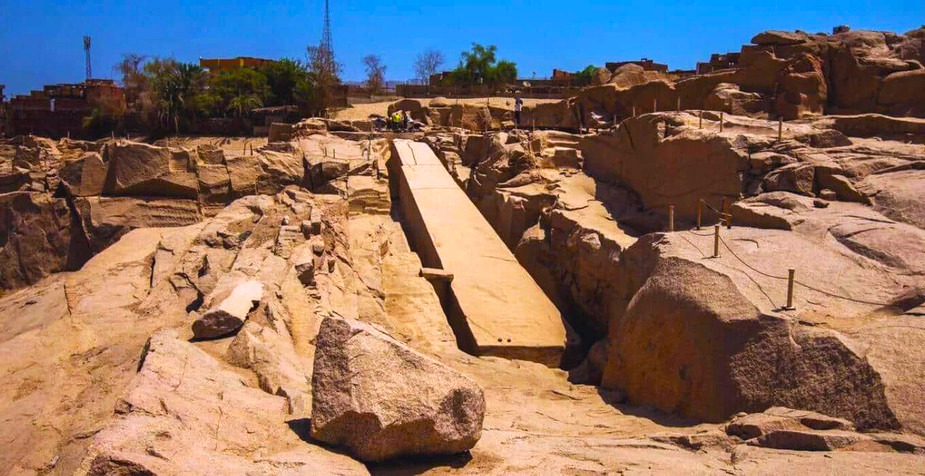
The Unfinished Obelisk: Ancient Egypt's Greatest Stone Mystery in Aswan
When visitors think of Aswan, Egypt, the magnificent temples of Abu Simbel or the serene beauty of the Nile often come to mind. Yet hidden within the northern granite quarries lies one of ancient Egypt's most fascinating archaeological sites: the Unfinished Obelisk in Aswan Egypt. This colossal monument, forever frozen in time, offers an extraordinary window into the engineering prowess and ambitions of the ancient Egyptians.
What Is the Unfinished Obelisk?
The Unfinished Obelisk in Aswan Egypt is an enormous ancient Egyptian obelisk that remains partially carved from its bedrock in the granite quarries of Aswan. Had it been completed, this magnificent structure would have stood approximately 42 meters (137 feet) tall and weighed around 1,200 tons, making it the largest obelisk ever constructed in ancient Egypt.
Commissioned during the reign of Queen Hatshepsut in the 18th Dynasty (circa 1508-1458 BCE), the obelisk was likely intended to complement the Lateran Obelisk, which originally stood at the Karnak Temple complex in Luxor. However, fate had other plans for this ambitious project.
Why Was the Obelisk Never Finished?
The story of why this massive monument remains unfinished is etched into the stone itself. As ancient workers painstakingly carved the obelisk from the bedrock using dolerite pounders and copper tools, a series of cracks appeared in the granite. These fissures rendered the stone unusable for its intended purpose, and the project was ultimately abandoned.
Rather than attempting to salvage the damaged stone or start anew elsewhere, the ancient Egyptians left the obelisk exactly where it lay. This decision, made over 3,500 years ago, has proven invaluable to modern archaeologists and historians.
A Living Laboratory of Ancient Egyptian Stone Working
What makes the Unfinished Obelisk truly remarkable is that it serves as an open-air museum of ancient Egyptian quarrying and construction techniques. Unlike finished monuments where the methods of creation remain hidden, this site preserves every stage of the obelisk-making process.
Visitors can observe the trenches carved around the obelisk, approximately 75 centimeters wide, where workers would have labored in cramped conditions. The marks left by their tools are still visible on the granite surfaces, telling the story of countless hours of human effort. Archaeologists estimate that hundreds of workers would have been involved in this project, working in shifts to separate the massive stone from its bedrock.
The ancient Egyptians used a technique involving dolerite pounders, extremely hard stones used to pound and fracture the granite. Workers would have first marked the outline of the obelisk, then created trenches around it by repeatedly striking the granite with these pounders. Wooden wedges soaked in water may have been used in the final separation process, as the expanding wood could create enough pressure to split the stone.
Visiting the Unfinished Obelisk: What to Expect
Located in the northern granite quarries of Aswan, the Unfinished Obelisk is easily accessible and makes for an excellent addition to any Aswan itinerary. The site is typically open daily from 7:00 AM to 5:00 PM, though hours may vary seasonally.
The quarry site covers a substantial area, and visitors can walk around the obelisk, viewing it from multiple angles. Informative plaques explain the construction techniques and historical context, though hiring a knowledgeable guide can significantly enhance your understanding and appreciation of the site.
The best time to visit is early morning or late afternoon to avoid the intense midday heat, particularly during summer months when temperatures in Aswan can soar above 40°C (104°F). Comfortable walking shoes are essential, as the terrain is uneven granite bedrock.
Other Monuments in Aswan's Quarries
While the Unfinished Obelisk is the star attraction, the granite quarries of Aswan contain other partially carved monuments and stone-working sites. Many of ancient Egypt's most famous monuments were crafted from Aswan granite, including obelisks that now stand in cities around the world, from Rome to Istanbul to New York City.
The quarries also feature numerous inscriptions and rock carvings that provide insights into the organization of labor, the names of workers and overseers, and the administrative systems that coordinated these massive construction projects.
Why Aswan Granite Was So Prized
Aswan's rose-red granite was among the most valued building materials in ancient Egypt. Its beautiful color, exceptional durability, and relative ease of extraction made it the stone of choice for royal monuments, temple columns, statues, and of course, obelisks.
The geological characteristics of Aswan granite, formed deep within the Earth and later exposed through erosion, made it ideal for large-scale monuments. Ancient Egyptians could identify suitable stone veins and extract massive blocks that would remain stable for millennia.
The Unfinished Obelisk's Legacy
Today, the Unfinished Obelisk stands as a UNESCO World Heritage Site as part of the "Nubian Monuments from Abu Simbel to Philae" designation. It represents an irreplaceable resource for understanding ancient Egyptian engineering, labor organization, and the technological capabilities of one of history's greatest civilizations.
For modern visitors, the site offers something rare in archaeology: the chance to see ancient technology in action. Unlike finished monuments that present only the final result, the Unfinished Obelisk reveals the process, the human effort, and even the challenges and setbacks that ancient builders faced.
Planning Your Visit to Aswan
The Unfinished Obelisk is located approximately 1.5 kilometers from central Aswan and can be reached easily by taxi or as part of organized tours that typically include other Aswan attractions such as the Philae Temple, the High Dam, and the Nubian Museum.
Most visitors spend 30-45 minutes at the site, though history enthusiasts and photographers may want to allow more time. The quarry provides excellent photo opportunities, with the contrast between the worked stone and surrounding bedrock creating dramatic compositions.
Combination tickets are often available that include entry to multiple Aswan archaeological sites, offering better value for those planning to explore the area's rich historical heritage.
Conclusion
The Unfinished Obelisk may never have achieved its intended glory standing tall against the Egyptian sky, but its failure has given us something perhaps more valuable: an unfiltered glimpse into the ambitions, techniques, and realities of ancient Egyptian monumental construction. For anyone traveling to Aswan, this remarkable site offers an experience that connects us directly to the craftsmen who worked here over three millennia ago, their tools still echoing in the marks they left behind.
Whether you're an archaeology enthusiast, a history buff, or simply a curious traveler, the Unfinished Obelisk deserves a place on your Egyptian adventure. It reminds us that even the greatest civilizations faced setbacks, and sometimes what remains unfinished tells the most compelling stories of all.
