
The Golden Age of the Mamluk Period: A Flourishing Era in Egyptian History
The Golden Age of the Mamluk Period represents one of the most fascinating and culturally rich eras in the history of Egypt and the wider Middle East. Lasting from the 13th to the early 16th century, the Mamluk era witnessed remarkable achievements in architecture, trade, military power, and Islamic scholarship. This period transformed cities such as Cairo into global centers of culture and commerce, leaving behind an extraordinary architectural and cultural legacy that still shapes Egypt today.
In this article, we explore the rise, achievements, and historical importance of the Golden Age of the Mamluk Period, highlighting why it remains one of the most influential chapters in medieval Islamic history.
Who Were the Mamluks?
The word Mamluk literally means “owned” or “slave.” The Mamluks were originally slave soldiers, mostly of Turkic and Caucasian origin, who were trained as elite warriors in the Islamic world. Over time, these soldiers rose to power and eventually established their own ruling dynasty.
The Mamluk Sultanate ruled large parts of the Middle East from 1250 to 1517, controlling territories that included Egypt, Syria, and parts of the Arabian Peninsula. Their capital was the vibrant city of Cairo, which became one of the most important cities of the medieval world.
The Rise of the Mamluk Sultanate
The Mamluk rule officially began after the collapse of the Ayyubid dynasty in 1250. One of the defining moments in their rise to power was the victory against the Mongols in the famous Battle of Ain Jalut in 1260. Led by the sultan Qutuz and the military commander Baibars, the Mamluks halted the Mongol expansion into the Middle East.
This victory was historically significant because it stopped the Mongols’ westward advance and protected the Islamic heartlands. Soon after, Sultan Baibars strengthened the Mamluk state and laid the foundations for a powerful empire.
Cairo: The Heart of the Mamluk Golden Age
During the Golden Age of the Mamluk Period, Cairo became one of the largest and most prosperous cities in the world. It served as a major hub for international trade connecting Europe, Africa, and Asia.
Merchants traveling between the Mediterranean and the Indian Ocean often passed through Egypt. This strategic location allowed the Mamluks to control valuable trade routes for spices, textiles, and precious goods.
As a result, Cairo flourished economically and culturally, attracting scholars, architects, and artisans from across the Islamic world.
Architectural Achievements of the Mamluks
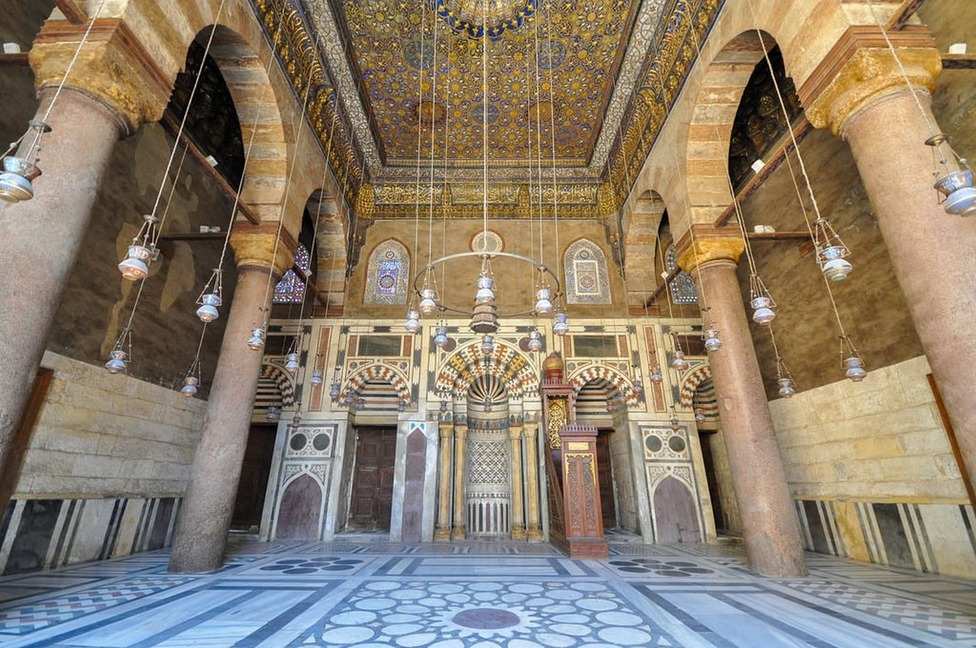
One of the most visible legacies of the Mamluk Golden Age is its magnificent architecture. The Mamluks built hundreds of mosques, madrasas (Islamic schools), hospitals, and mausoleums throughout Cairo and other cities.
Some of the most famous Mamluk monuments include:
-
Mosque-Madrasa of Sultan Hassan
-
Mosque of Sultan Al-Nasir Muhammad
-
Qalawun Complex
These structures are renowned for their intricate stone carvings, towering minarets, decorative domes, and beautiful geometric patterns. Many of these buildings still stand today in the historic district of Islamic Cairo, which is recognized as a UNESCO World Heritage site.
Centers of Learning and Islamic Scholarship
The Golden Age of the Mamluk Period also saw significant developments in education and intellectual life. Cairo became a major center of Islamic scholarship, attracting theologians, jurists, historians, and scientists.
Institutions such as Al-Azhar University flourished during this time and expanded their influence throughout the Islamic world.
Many important historical works were written during the Mamluk era, documenting the politics, society, and culture of the medieval Middle East.
Military Strength and Political Influence
The Mamluks were famous for their powerful military system. Their elite cavalry and strict training programs made them one of the most formidable armies of the medieval world.
They successfully defended the region against major threats, including:
-
The Mongol invasions
-
The remaining Crusader states in the Levant
Under strong rulers like Sultan Qalawun and Sultan Al-Nasir Muhammad, the Mamluk Sultanate expanded its influence and maintained regional stability for centuries.
Trade and Economic Prosperity
Another key factor behind the Golden Age of the Mamluk Period was its thriving economy. The Mamluks controlled major trade routes between Europe and Asia, particularly the spice trade.
Ports along the Red Sea and the Mediterranean facilitated commerce between merchants from:
-
India
-
China
-
Italy
This trade brought immense wealth to the Mamluk state and allowed them to finance large construction projects and support the arts and sciences.
The Decline of the Mamluk Golden Age
Despite their success, the Mamluk Sultanate eventually began to decline. Internal political struggles, economic challenges, and changing global trade routes weakened their power.
The final end of the Mamluk rule came in 1517 when the Ottoman Empire, led by Selim I, conquered Egypt during the Ottoman–Mamluk War.
This marked the end of the Mamluk Sultanate, although many aspects of their culture and administrative systems continued under Ottoman rule.
Legacy of the Mamluk Golden Age
Today, the legacy of the Golden Age of the Mamluk Period is still visible throughout Cairo and other historic cities in Egypt. Their architectural masterpieces, cultural contributions, and historical achievements remain a vital part of Egypt’s heritage.
Visitors exploring historic areas such as Islamic Cairo can still admire the stunning monuments and urban landscape shaped by the Mamluks more than 700 years ago.
The Mamluk Golden Age stands as a powerful reminder of how a unique military class transformed itself into one of the most influential dynasties in medieval history.
FAQ About the Golden Age of the Mamluk Period
When was the Golden Age of the Mamluk Period?
The Golden Age of the Mamluk Period generally refers to the 13th and 14th centuries, when the Mamluk Sultanate reached its peak in power, wealth, and cultural influence.
Why was the Mamluk era important for Cairo?
During this time, Cairo became one of the largest and most influential cities in the medieval world, known for its architecture, trade, and Islamic scholarship.
What ended the Mamluk Sultanate?
The Mamluk rule ended in 1517 when the Ottoman Empire defeated them in the Ottoman–Mamluk War and incorporated Egypt into the Ottoman Empire.
