
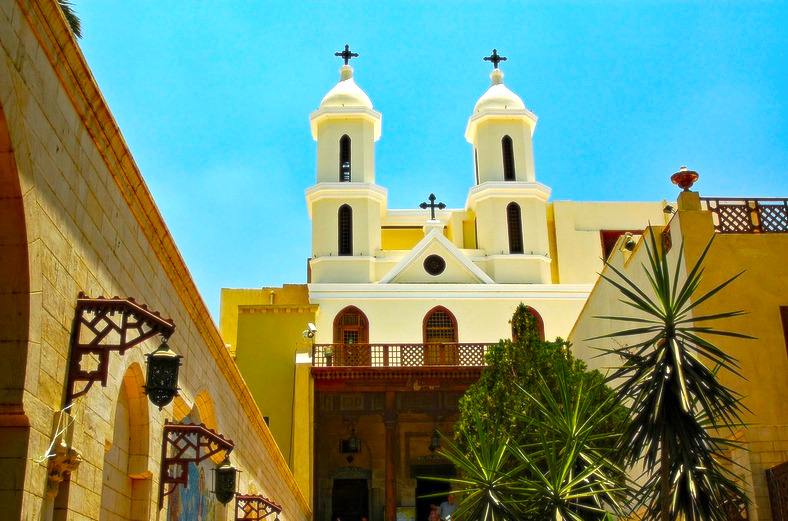
The Hanging Church: Cairo’s Ancient Christian Marvel Suspended Above History
Introduction
In the heart of Coptic Cairo, the Hanging Church rises above the ruins of an ancient Roman fortress. Officially called Saint Virgin Mary’s Coptic Orthodox Church, it dates back to the third century, making it one of Egypt’s oldest churches. Its unique location above the gatehouse of the Babylon Fortress gave it the famous name “the Hanging Church.” Visitors climb 29 steps to reach the entrance, creating a dramatic transition from the busy streets below to the calm sanctuary above.
Whether you love history, architecture, or spiritual heritage, the Hanging Church offers a remarkable journey through 1,700 years of faith, art, and resilience.
Why Is It Called the Hanging Church?
The church earned its name because builders constructed it above the southern gate of the Babylon Fortress. The nave once hung over an open passage, giving the impression that the church floated in mid-air. Over time, rising ground levels reduced this dramatic effect by nearly six meters.
Early travelers also called it “the Staircase Church,” referring to the 29 steps leading to the entrance. These steps heighten anticipation and prepare visitors for the sacred space inside.
A Journey Through History
Ancient Origins
The Hanging Church likely took shape during the patriarchate of Isaac. However, some historians believe an earlier church existed as early as the 3rd or 4th century. Builders positioned it directly above the Roman gatehouse, which Emperor Trajan built in the 1st century AD.
Patriarchal Significance
During the 11th century, the church became the official residence of the Coptic patriarchs. This move marked a key moment in Egyptian Christian history. Pope Abraham (975–978) ordered major restorations, which strengthened the church’s role as the heart of Coptic authority.
For many centuries, leaders used the church to select patriarchs, hold important ceremonies, consecrate holy oil, and resolve religious disputes.
Periods of Turmoil and Restoration
The church endured several hardships. In 840 AD, Governor Ali ibn Yahia the Armenian damaged the building during a conflict with the patriarch. Later, authorities converted it into a mosque for a brief period, until it was reconsecrated in the 10th century.
Modern challenges also shaped its story. In 1983, part of a chapel ceiling collapsed after structural changes. The 1992 earthquake caused further damage. After many years of careful work, a full restoration finished in 2011 and preserved the church for future generations.
Architectural Splendor
Basilican Design
Many visitors praise the church for its elegant basilican layout. Its wooden roof resembles the shape of Noah’s Ark, symbolizing safety, salvation, and the journey toward God.
The Sacred Interior
Inside the church, visitors discover a rich collection of religious art.
The Three Sanctuaries:
The central sanctuary honors the Virgin Mary. The left one is dedicated to Saint George, and the right one to Saint John the Baptist. Painted baldachins rise above the altars, creating a sense of heavenly protection.
The Iconostasis:
A stunning wooden screen separates the nave from the sanctuaries. Craftsmen decorated it with ebony and ivory in geometric patterns. Above it, precious icons show Jesus enthroned between the Virgin Mary, archangels, and apostles.
The Marble Pulpit:
This 5th-century pulpit rests on 15 slender columns. These represent Jesus, the 12 disciples, John the Baptist, and the Virgin Mary. Each side shows a cross symbolizing the three days Christ spent in the tomb.
The Icon Collection
The Hanging Church houses 110 icons. The most famous is the “Coptic Mona Lisa,” dating back to the 8th century. It shows the Virgin Mary holding baby Jesus with John the Baptist standing beside them. Many visitors consider it the holiest artifact in the church.
Other icons tell the stories of Saint George (15 icons) and John the Baptist (7 icons), helping visitors understand their lives and sacrifices.
The Miracle of Moqattam Mountain
One of the church’s most beloved stories is the miracle of moving the Moqattam Mountain. Al-Mu’izz, a Fatimid caliph, challenged Patriarch Abraham to prove a biblical verse by moving the mountain. According to tradition, the patriarch’s prayer caused the mountain to shift. This miracle impressed Al-Mu’izz and strengthened the status of the Coptic Church.
Exploring the Hanging Church Complex
The Oldest Section
A door in the southeastern corner leads to the church’s oldest area. It contains three sanctuaries dedicated to Saint Dimiana, Saint Takla Hymanot, and Saint Andrew. This section also includes a baptistery and frescoes showing the Nativity and the 24 elders of the Apocalypse.
Nearby Attractions
Visitors can easily explore several important sites surrounding the church, such as:
-
The Coptic Museum – two minutes away
-
Abu Serga Church – built over a place believed to have sheltered the Holy Family
-
Ben Ezra Synagogue – a historic Jewish site
-
Babylon Fortress – the Roman structure that supports the Hanging Church
Visitor Information
Location
The church stands on Mari Girgis Street in Coptic Cairo, near the Mar Girgis metro station.
Opening Hours
-
Daily: 9:00 AM – 5:00 PM
-
Coptic Mass:
-
Wednesdays & Fridays: 8:00 AM – 11:00 AM
-
Sundays: 9:00 AM – 11:00 AM
-
Entry and Etiquette
Entry is free, but donations help preserve the site. Visitors should:
-
Dress modestly
-
Remove shoes before entering sacred areas
-
Keep noise to a minimum
-
Use photography respectfully
Best Time to Visit
Early mornings offer a peaceful experience. Weekends and feast days allow visitors to witness active worship, though crowds are larger. Weekday mornings provide the quietest atmosphere.
The Living Legacy
The Hanging Church remains a vibrant center of Coptic worship. Daily prayers, liturgies, and feast celebrations fill the building with life. After surviving invasions, natural disasters, and political changes, the church stands as a symbol of endurance.
Its preservation highlights the devotion of the Coptic community and Egypt’s commitment to protecting religious heritage.
Why Visit the Hanging Church?
For History Lovers
The church reflects the Roman, Byzantine, and early Islamic eras. It offers insight into Egypt’s multicultural heritage.
For Architecture Enthusiasts
Its suspended structure, basilican layout, and artistic woodwork make it one of Cairo’s architectural gems.
For Art Admirers
The icons, screens, columns, and frescoes showcase centuries of Coptic artistic traditions.
For Spiritual Seekers
With almost 1,700 years of continuous worship, the church provides a powerful spiritual atmosphere.
Practical Tips
-
Combine your visit with the Coptic Museum, Abu Serga Church, and Ben Ezra Synagogue
-
Hire a guide to learn the deeper symbolism behind the artwork
-
Attend a service for an immersive experience
-
Bring water, especially in summer
-
Allow at least 45–60 minutes for your visit
-
Respect worshippers and the sacred environment
Conclusion
The Hanging Church stands as one of Cairo’s most treasured landmarks. Suspended above the ancient Babylon Fortress, it reflects centuries of faith, art, and survival. As you climb the 29 steps and enter this historic sanctuary, you step into a living tradition that has lasted nearly two millennia. Whether your interest lies in history, architecture, or spirituality, a visit to the Hanging Church offers a meaningful and unforgettable experience.
