
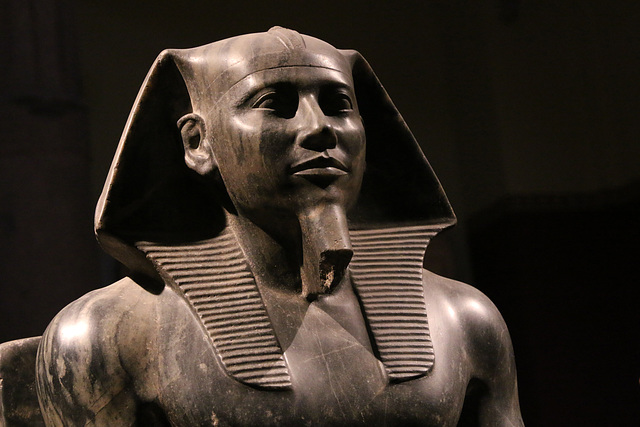
King Cheops: The Pharaoh Behind the Great Pyramid of Giza
When visitors stand before the Great Pyramid of Giza, they're witnessing the enduring legacy of one of ancient Egypt's most ambitious rulers: King Cheops. Known to the ancient Egyptians as Khufu, King Cheops reigned during the Fourth Dynasty of the Old Kingdom, approximately 2589-2566 BCE, and transformed the Egyptian landscape forever with his monumental building projects.
Who Was King Cheops?
King Cheops was the second pharaoh of Egypt's Fourth Dynasty, succeeding his father, King Sneferu. Historical records suggest that Cheops inherited a wealthy and stable kingdom, which provided him with the resources necessary to undertake one of humanity's most extraordinary architectural achievements. Despite the grandeur of his pyramid, surprisingly little is known about Cheops' personality or reign from contemporary sources.
The Greek historian Herodotus, writing more than 2,000 years after Cheops' death, portrayed him as a tyrannical ruler who oppressed his people to build his monument. However, modern Egyptologists treat these accounts with skepticism, as they were written long after the pharaoh's time and may reflect Greek biases rather than historical reality.
The Great Pyramid: Cheops' Eternal Monument
The defining achievement of King Cheops' reign was undoubtedly the construction of the Great Pyramid at Giza. This architectural marvel held the title of the world's tallest man-made structure for nearly 4,000 years. Originally standing at 146.6 meters (481 feet), the pyramid was built with approximately 2.3 million limestone blocks, each weighing an average of 2.5 tons.
The precision of the Great Pyramid's construction continues to astound researchers today. The base of the pyramid is nearly perfectly level, with a margin of error of just 2.1 centimeters. The sides are aligned almost exactly with the four cardinal directions, demonstrating the ancient Egyptians' sophisticated understanding of astronomy and mathematics.
How Did King Cheops Build the Great Pyramid?
The construction methods employed by King Cheops and his architects remain a subject of scholarly debate. Contrary to popular belief, recent archaeological evidence suggests that the pyramid was built not by slaves, but by a rotating labor force of skilled workers and seasonal laborers. These workers were likely Egyptian citizens who worked on the pyramid during the Nile's flood season when agricultural work was impossible.
Discoveries of workers' villages near the Giza plateau have revealed that these laborers were well-fed and received medical care, challenging earlier narratives about the pyramid's construction. The project would have required enormous organizational capabilities, showcasing King Cheops' administrative prowess alongside his architectural ambitions.
The Cheops Boat: A Journey to the Afterlife
In 1954, archaeologists discovered a remarkable artifact sealed in a pit near the Great Pyramid: a full-sized cedar wood boat, now known as the Cheops boat or Khufu ship. This 43.4-meter-long vessel had been disassembled into 1,224 pieces and carefully buried.
The Cheops boat provides valuable insight into the pharaoh's beliefs about the afterlife. Ancient Egyptians believed that the deceased needed a boat to travel through the underworld and accompany the sun god Ra on his daily journey across the sky. This solar boat exemplifies the religious significance that King Cheops placed on his eternal journey.
King Cheops in Historical Context
King Cheops ruled during Egypt's Old Kingdom, often referred to as the "Age of the Pyramids." This period represented the zenith of pyramid construction and one of the most prosperous eras in ancient Egyptian history. Cheops' pyramid was part of a larger trend, following his father Sneferu's pyramid-building experiments and preceding those of his successors, Khafre and Menkaure, whose pyramids also stand at Giza.
The reign of King Cheops occurred during a time when the pharaoh was considered a living god, the sole intermediary between the Egyptian people and the divine realm. This god-king status justified the immense resources devoted to royal burial monuments like the Great Pyramid.
Archaeological Evidence of King Cheops
Despite the enormity of his pyramid, physical evidence of King Cheops himself is surprisingly scarce. The most famous representation is a small ivory statuette, just 7.5 centimeters tall, discovered at Abydos. This miniature figure is the only three-dimensional portrait of the great pharaoh ever found.
Inside the Great Pyramid, Cheops' burial chamber sits at the heart of the structure, accessed through the Grand Gallery, an architectural wonder in its own right. Unfortunately, the chamber was found empty in ancient times, likely plundered by tomb robbers. No trace of King Cheops' mummy has ever been definitively identified.
The Legacy of King Cheops
More than 4,500 years after his death, King Cheops remains one of the most famous pharaohs in history, despite the limited historical records about his life and reign. His Great Pyramid stands as the last surviving wonder of the ancient world, attracting millions of visitors annually and inspiring countless theories about its construction and purpose.
The pyramid complex of King Cheops demonstrates the remarkable achievements of ancient Egyptian civilization in engineering, mathematics, astronomy, and social organization. It serves as a testament to human ambition and capability, showing what can be accomplished when vision, resources, and determination align.
Visiting King Cheops' Legacy Today
Today, visitors to Egypt can explore the legacy of King Cheops at the Giza Plateau. While the pyramid's interior can be visited, the tight corridors and steep passages make it a challenging climb. The nearby Solar Boat Museum houses the reconstructed Cheops boat, offering a tangible connection to the pharaoh's vision of the afterlife.
The Great Pyramid continues to reveal its secrets gradually. Modern technology, including cosmic ray imaging and robotic exploration, has discovered previously unknown chambers and passages, suggesting that King Cheops' monument may still hold mysteries waiting to be uncovered.
Conclusion
King Cheops transformed the ancient Egyptian landscape and left an indelible mark on human history. While the historical Khufu remains somewhat enigmatic, his architectural legacy speaks volumes about the ambitions, capabilities, and beliefs of ancient Egypt's Fourth Dynasty. The Great Pyramid stands not just as a tomb, but as a statement of power, a demonstration of engineering excellence, and a bridge connecting modern civilization to our ancient past.
Whether you view King Cheops as a visionary leader or a monument to royal excess, there's no denying that his pyramid has captured human imagination for millennia and will likely continue to do so for thousands of years to come.
home
