
Eye of Horus vs Eye of Ra: Meaning & Key Differences
When exploring ancient Egyptian mythology, two symbols frequently captivate modern audiences: the Eye of Horus and the Eye of Ra. While these iconic eyes appear similar at first glance, they represent distinct concepts in Egyptian belief systems and carry different meanings. This comprehensive guide will help you understand the differences between these two powerful symbols, their origins, and their significance in ancient Egyptian culture.
What is the Eye of Horus?
The Eye of Horus, also known as the Wadjet or Wedjat eye, is one of the most recognizable symbols from ancient Egypt. This symbol represents the left eye of the falcon-headed god Horus and carries deep protective and healing significance.
The Mythology Behind the Eye of Horus
According to Egyptian mythology, Horus lost his left eye during an epic battle with Set, the god of chaos and disorder, while avenging his father Osiris's murder. The eye was torn into six pieces during the violent confrontation. Thoth, the god of wisdom and magic, miraculously restored the eye, making it whole again. This restoration transformed the Eye of Horus into a powerful symbol of healing, protection, and wholeness.
Symbolism and Meaning of the Eye of Horus
The Eye of Horus represents several important concepts in ancient Egyptian culture:
- Protection: Ancient Egyptians believed the symbol offered protection against evil and harm
- Healing and restoration: Due to its mythological healing, it became associated with medical recovery
- Wholeness and completeness: The restored eye symbolized making something whole again
- Royal power: Connected to the pharaoh's divine authority
- Good health: Frequently used in amulets to promote wellness
The distinctive markings beneath the Eye of Horus are particularly significant. These markings resemble the facial patterns of a falcon, Horus's sacred animal, reinforcing the connection between the god and the symbol.
What is the Eye of Ra?
The Eye of Ra, sometimes called the Eye of Re, is associated with the right eye and represents the sun god Ra, one of the most important deities in Egyptian mythology. This symbol embodies a markedly different energy than the Eye of Horus.
The Mythology Behind the Eye of Ra
The Eye of Ra has several mythological origins, but the most prominent story involves Ra sending his eye as a separate entity to punish humanity for their disobedience. This eye could manifest as various fierce goddesses, including Sekhmet, Hathor, or Wadjet, who would exact Ra's vengeance upon wrongdoers.
In another myth, Ra's eye traveled to the distant waters of Nun and returned as the destructive goddess Sekhmet. The eye operated as an extension of Ra's power, acting independently to protect the sun god and enforce cosmic order.
Symbolism and Meaning of the Eye of Ra
The Eye of Ra carries symbolism that differs significantly from the Eye of Horus:
- Divine wrath and fury: The eye represents Ra's destructive power against enemies
- Protection through aggression: Unlike the gentle protection of Horus's eye, Ra's eye actively destroys threats
- Feminine power: Often manifested through fierce goddesses
- Solar energy: Connected to the sun's life-giving but potentially destructive force
- Royal authority: Symbolized the pharaoh's power to destroy enemies of Egypt
Eye of Horus vs Eye of Ra: Key Differences
Understanding the distinctions between these two symbols helps clarify their unique roles in Egyptian mythology and culture.
Visual Differences
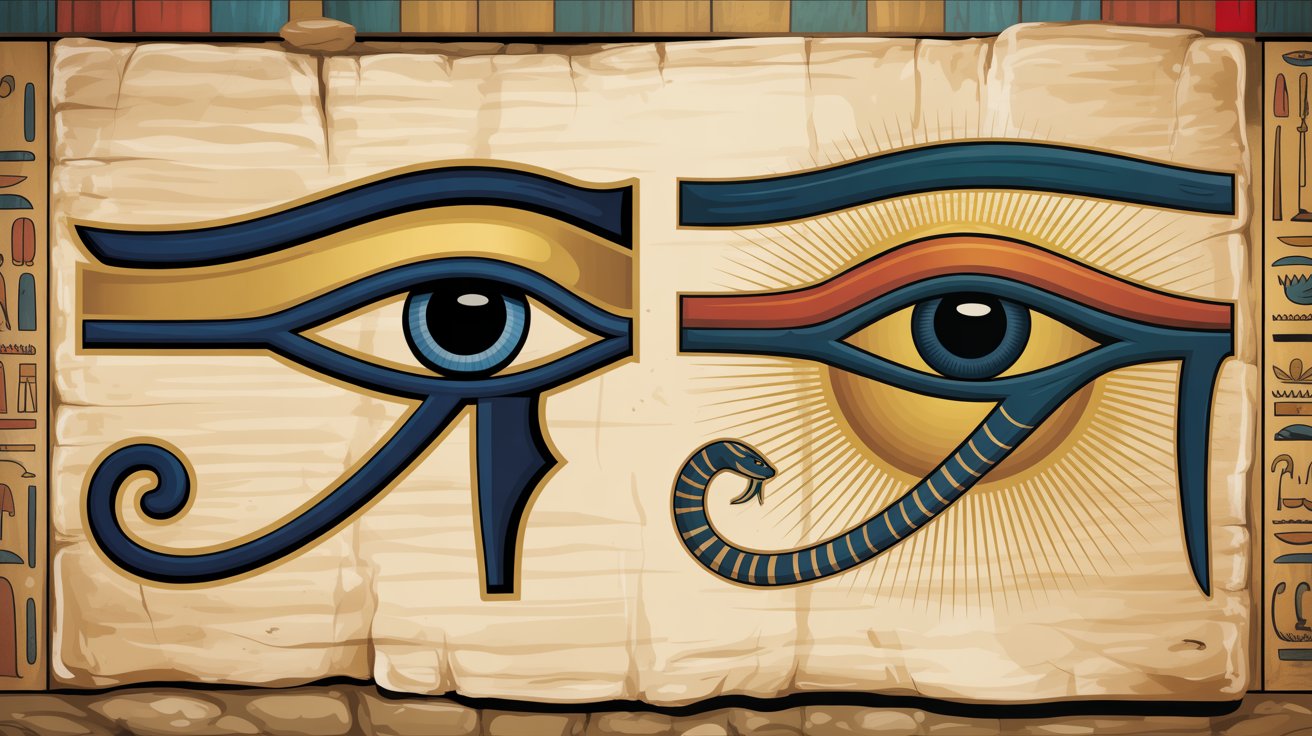
While both symbols depict stylized eyes with distinctive Egyptian artistic features, subtle differences exist:
- Eye of Horus: Represents the left eye, features the characteristic markings resembling a falcon's facial patterns below the eye, including a spiral curl and a teardrop shape
- Eye of Ra: Represents the right eye, may appear similar but lacks the specific falcon markings, often depicted with more aggressive or solar imagery
In practice, many ancient depictions can represent either symbol, as the basic eye iconography overlapped significantly in Egyptian art.
Mythological Differences
The origin stories reveal the fundamental difference in character:
- Eye of Horus: Born from loss and restoration, representing resilience and healing
- Eye of Ra: An active force of divine power, representing aggression and protection through destruction
Functional Differences
Ancient Egyptians used these symbols for different purposes:
Eye of Horus:
- Worn as protective amulets for health and safety
- Used in funerary contexts to aid the deceased
- Featured in mathematical and measurement systems
- Placed on ships to ensure safe navigation
Eye of Ra:
- Invoked for protection against enemies
- Used to represent the pharaoh's power to vanquish threats
- Associated with military might
- Connected to temple rituals involving powerful goddesses
Energy and Symbolism Differences
The fundamental energetic difference between these symbols is crucial:
- Eye of Horus: Passive protection, healing, lunar associations (connected to the moon in some interpretations), gentle restoration
- Eye of Ra: Active aggression, solar power, fierce destruction of evil, intense protective energy
The Mathematical Significance of the Eye of Horus
One fascinating aspect of the Eye of Horus is its connection to ancient Egyptian mathematics. The six parts of the eye that were restored by Thoth represented fractions used in mathematical calculations:
- Right side of the eye: 1/2
- Pupil: 1/4
- Eyebrow: 1/8
- Left side of the eye: 1/16
- Curved tail: 1/32
- Teardrop: 1/64
These fractions add up to 63/64, with the missing 1/64 representing the magical element Thoth added during the restoration. Ancient Egyptians used these measurements for calculating grain and other commodities.
Modern Interpretations and Uses
Both the Eye of Horus and Eye of Ra continue to captivate people today, appearing in various contexts:
Contemporary Symbolism
People worldwide use these symbols for different purposes:
- Jewelry and tattoos: Many wear these symbols for their protective qualities and aesthetic appeal
- Spiritual practices: Modern practitioners invoke these symbols in meditation and protection rituals
- Pop culture: Both eyes appear frequently in films, games, and literature featuring Egyptian themes
- Art and design: The striking imagery inspires countless artistic interpretations
Choosing Between the Symbols
When deciding which symbol resonates with you, consider:
- Choose the Eye of Horus if you seek healing, gentle protection, restoration, or connection to lunar energy
- Choose the Eye of Ra if you need fierce protection, want to channel powerful energy, or connect with solar symbolism
Many people appreciate both symbols for their unique qualities and the complementary balance they represent.
Common Misconceptions
Several misunderstandings surround these symbols:
Myth: The symbols are interchangeable Reality: While visually similar, they represent different concepts and deities
Myth: All Egyptian eye symbols are the same Reality: Multiple eye symbols existed in Egyptian iconography, each with distinct meanings
Myth: The Eye of Horus is always left-facing and the Eye of Ra right-facing Reality: Artistic conventions varied, and orientation alone doesn't always distinguish them
The Cultural Legacy
The enduring popularity of both the Eye of Horus and Eye of Ra demonstrates the lasting impact of ancient Egyptian civilization on global culture. These symbols have transcended their original religious context to become universal icons representing protection, power, and ancient wisdom.
Ancient Egyptians embedded these symbols throughout their society, from royal regalia to common amulets, demonstrating how deeply these concepts permeated their worldview. The careful distinction they maintained between different types of divine power and protection reveals a sophisticated understanding of spiritual forces.
Conclusion
While the Eye of Horus and Eye of Ra share visual similarities and both originate from ancient Egyptian mythology, they represent fundamentally different concepts. The Eye of Horus embodies healing, protection, and restoration, born from trauma and made whole through divine intervention. The Eye of Ra represents fierce protective power, divine wrath, and the active destruction of threats.
Understanding these differences enriches our appreciation of ancient Egyptian culture and helps us use these symbols more meaningfully today. Whether you're drawn to the gentle, restorative energy of Horus's eye or the fierce, protective power of Ra's eye, both symbols offer profound connections to one of history's most fascinating civilizations.
These ancient symbols remind us that protection can take many forms—from the healing touch that makes us whole to the fierce guardian that stands between us and harm. In the rich tapestry of Egyptian mythology, both eyes continue to watch over humanity, each in its own powerful way.
home
