
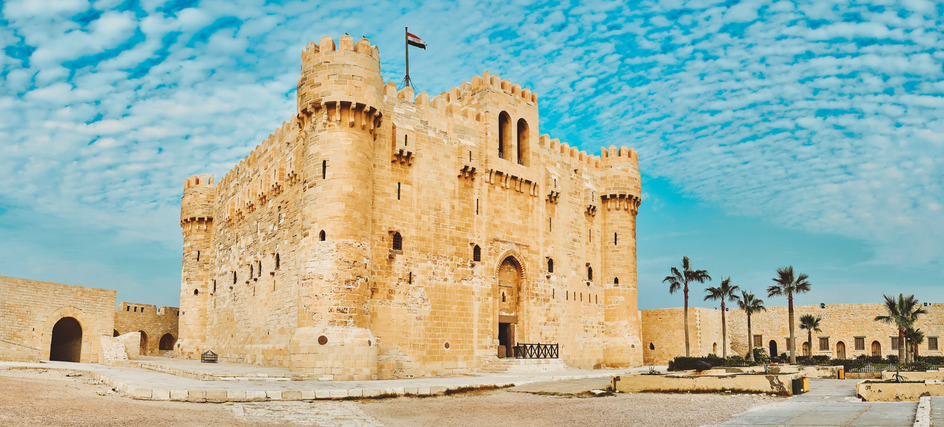
The Citadel of Qaitbay: Alexandria's Fortress by the Sea
Standing proudly on the Mediterranean coastline, the Citadel of Qaitbay is one of Alexandria's most iconic landmarks. This 15th-century fortress tells a story of defensive architecture, historical resilience, and the enduring legacy of Egypt's maritime heritage. Whether you're a history enthusiast, architecture lover, or simply seeking breathtaking coastal views, Qaitbay Fortress offers an unforgettable experience.
A Fortress Built on Ancient Foundations
The Qaitbay Citadel Alexandria was constructed in 1477 CE by Sultan Al-Ashraf Sayf al-Din Qaitbay, the Mamluk ruler of Egypt. What makes this site truly remarkable is its location: the fortress was built on the exact spot where the legendary Pharos Lighthouse once stood, one of the Seven Wonders of the Ancient World. After the lighthouse was destroyed by earthquakes in the 14th century, Sultan Qaitbay used some of its fallen stones to construct this defensive fortress, creating a tangible link between ancient and medieval Egypt.
Architectural Marvel of Military Design
The Citadel of Qaitbay showcases exceptional Islamic military architecture. The fortress features thick limestone walls, strategic towers, and a well-planned defensive system designed to protect Alexandria from Ottoman naval threats. The main tower rises three stories high, with each level serving specific military functions.
Key architectural features include narrow windows for archers, a mosque within the fortress walls, and a series of corridors and chambers that once housed soldiers and stored weapons. The fortress's strategic position on the narrow strip of land extending into the Mediterranean allowed defenders to monitor and control maritime traffic entering Alexandria's Eastern Harbor.
What to Expect During Your Visit
Today, the Qaitbay Fortress functions as a maritime museum and one of Alexandria's most visited attractions. Visitors can explore the fortress's various levels, walk along its ramparts, and enjoy panoramic views of the Mediterranean Sea. The interior houses exhibits showcasing artifacts recovered from the harbor, including remnants believed to be from the ancient Pharos Lighthouse.
The fortress offers several distinct areas to explore:
The Main Tower: Climb to the top for spectacular views of Alexandria's coastline and the surrounding sea. The upper levels provide insight into how soldiers once defended this crucial position.
The Mosque: Located within the fortress complex, this small mosque reflects the religious devotion maintained by the garrison stationed here.
The Maritime Museum: Discover Alexandria's naval history through displays of ancient maritime equipment, naval instruments, and archaeological finds from underwater excavations.
The Outer Walls and Courtyard: Walk along the defensive walls and imagine the fortress during its active military days, when it served as Alexandria's primary coastal defense.
Historical Significance Through the Centuries
The Citadel of Qaitbay witnessed numerous historical events throughout its existence. It successfully defended Alexandria against Ottoman naval attacks during the Mamluk period, though the city eventually fell to Ottoman control in 1517. Under Ottoman rule, the fortress continued to serve military purposes. During Napoleon's Egyptian campaign in 1798, French forces captured the citadel, and it later played a role during the British occupation of Egypt.
In 1882, the fortress suffered significant damage during the British bombardment of Alexandria. Subsequent restoration efforts in the 20th century, particularly under King Farouk and later the Egyptian government, preserved this architectural treasure for future generations.
The Legend of the Pharos Lighthouse
No discussion of the Qaitbay Citadel Alexandria is complete without mentioning its illustrious predecessor. The Pharos Lighthouse, built in the 3rd century BCE during the reign of Ptolemy II, stood approximately 100 meters tall and guided ships safely into Alexandria's harbor for over 1,500 years. When earthquakes finally toppled this wonder in the 14th century, its massive stones lay scattered in the harbor.
Recent underwater archaeological expeditions have discovered numerous artifacts and architectural elements from the ancient lighthouse in the waters surrounding the Citadel of Qaitbay, confirming that this fortress truly stands on the foundations of one of humanity's greatest architectural achievements.
Planning Your Visit to Qaitbay Fortress
The Citadel of Qaitbay is easily accessible from central Alexandria, located in the Anfoushi neighborhood at the eastern end of Pharos Island. The fortress is open daily, with extended hours during summer months when Mediterranean breezes make the visit especially pleasant.
Visitors should allocate at least 1-2 hours to fully explore the fortress, though photography enthusiasts might want more time to capture the stunning views and architectural details. The site is particularly beautiful during sunset, when the Mediterranean light bathes the limestone walls in golden hues.
Modest dress is recommended out of respect for the mosque within the complex, and comfortable walking shoes are essential for navigating the fortress's various levels and stone staircases.
Why the Citadel of Qaitbay Matters Today
Beyond its historical and architectural significance, the Qaitbay Fortress represents Alexandria's enduring spirit. It connects visitors to multiple layers of Egyptian history, from the Ptolemaic era through Islamic medieval times to modern Egypt. The fortress reminds us that Alexandria has always been a crossroads of civilizations, a city where Mediterranean cultures met and influenced one another.
The Citadel of Qaitbay also plays an important role in Egypt's cultural heritage preservation efforts. Ongoing conservation work ensures that future generations can experience this magnificent fortress and understand its place in the broader narrative of Mediterranean history.
Conclusion
The Citadel of Qaitbay stands as a testament to Egypt's rich and diverse history. Whether you're drawn by its connection to the ancient Pharos Lighthouse, its impressive Islamic architecture, or simply the promise of breathtaking sea views, this fortress delivers an experience that resonates long after your visit. As waves continue to crash against its walls just as they have for centuries, Qaitbay Citadel Alexandria remains a proud guardian of Egypt's Mediterranean coast, inviting travelers to step into history and witness where ancient wonder meets medieval might.
home
