
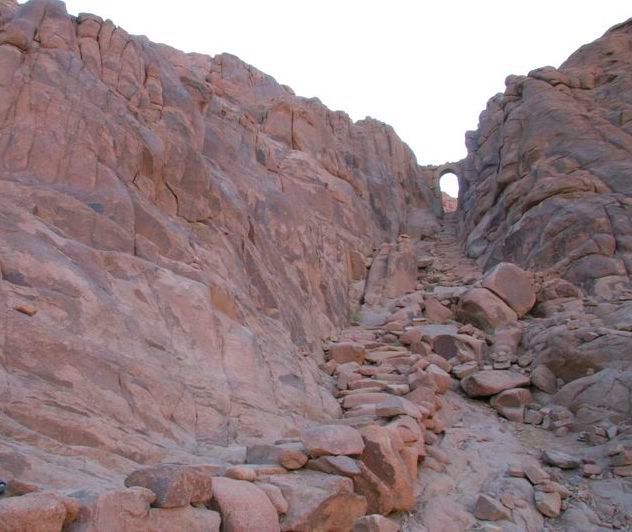
Mousa Mountain: Sacred Mount Sinai Guide
Mousa Mountain, also known as Mount Sinai or Jabal Musa (meaning "Mountain of Moses" in Arabic), stands as one of the most spiritually significant and historically rich destinations in Egypt. Rising to an elevation of 2,285 meters (7,497 feet) in the south-central Sinai Peninsula, this majestic peak has drawn pilgrims, adventurers, and spiritual seekers for thousands of years.
What Makes Mousa Mountain So Special?
Mousa Mountain holds profound religious significance across Judaism, Christianity, and Islam. According to sacred texts, this is the biblical Mount Sinai where the prophet Moses received the Ten Commandments from God after spending 40 days and 40 nights on the summit. This divine encounter makes Mousa Mountain one of the holiest sites in the Abrahamic faiths and a cornerstone of religious history.
The mountain's spiritual importance is matched by its natural grandeur. Composed of ancient granite formed during the late stages of the Arabian-Nubian Shield's evolution, Mousa Mountain features a striking ring complex of alkaline granites intruded into volcanic and other diverse rock types. Despite being surrounded by higher peaks in its mountain range—including Mount Catherine, Egypt's tallest peak at 2,629 meters—Mousa Mountain's isolated prominence and historical significance make it the most revered.
Location and How to Reach Mousa Mountain
Mousa Mountain is located near the town of Saint Catherine in the South Sinai governorate of Egypt, approximately 447 kilometers from Greater Cairo. The mountain's remote location adds to its mystique and spiritual atmosphere. Visitors typically access the area by road from several nearby cities, including Sharm el-Sheikh (230 km away), Dahab (133 km), and Nuweiba (120 km).
The journey to Mousa Mountain takes you through the dramatic landscape of the Sinai Peninsula, a region that serves as a natural bridge between Africa and Asia. The surrounding desert terrain, with its rugged mountains and expansive vistas, offers a glimpse into the harsh yet beautiful environment that has shaped the area's spiritual traditions for millennia.
The Sacred Sites at Mousa Mountain
Saint Catherine's Monastery
At the northern foot of Mousa Mountain stands the ancient Saint Catherine's Monastery, built in 530 CE by order of Byzantine Emperor Justinian I. This remarkable complex is considered the world's oldest continuously inhabited Christian monastery and remains home to a small community of monks from the autonomous Orthodox Church of Mount Sinai.
The monastery's significance extends beyond its age. Its library houses an extraordinary collection of ancient biblical manuscripts, including portions of the famous 4th-century Greek Codex Sinaiticus, which has been invaluable for biblical scholarship and textual reconstruction. The monastery was originally established in the 4th century at a site believed to be where Moses encountered the burning bush—a rare species of Rubus sanctus that still grows in the area.
The Summit
The peak of Mousa Mountain offers several sacred sites that continue to attract visitors. At the summit, you'll find a mosque that remains in use by Muslims, demonstrating the mountain's interfaith significance. Adjacent to the mosque stands a Greek Orthodox chapel, built in 1934 on the ruins of a 16th-century church. This chapel, though not open to the public, encloses the rock traditionally identified as the source of the biblical Tablets of Stone.
Also at the summit is Moses' Cave, believed to be the place where the prophet waited to receive the Ten Commandments from God. Below the peak lies Elijah's Plateau, where the biblical prophet Elijah is said to have sought God's presence.
Climbing Mousa Mountain: A Pilgrim's Journey
The trek to the summit of Mousa Mountain is as much a spiritual journey as it is a physical challenge. Most pilgrims and tourists begin their ascent around 2:00 AM, hiking through the darkness to reach the peak before dawn. This timing allows climbers to witness one of the most breathtaking experiences the mountain offers: sunrise from the summit.
There are two main routes to the top. The traditional camel path, known as Siket El Bashait, is longer but more gradual, winding through the mountainside. The more challenging route is the "Steps of Repentance," a steep stairway of approximately 3,750 steps carved by monks centuries ago. Many pilgrims choose to ascend via the camel path and descend via the steps.
The climb typically takes between two and three hours, depending on your pace and fitness level. While it's possible to hire camels for most of the camel path route, the final section to the summit must be completed on foot. The physical effort, combined with the pre-dawn darkness and the mountain's spiritual atmosphere, creates a profound experience of reflection and connection.
The View from the Top
Reaching the summit of Mousa Mountain rewards climbers with panoramic views that stretch across multiple countries and continents. From the peak, you can see the Gulf of Aqaba shimmering in the distance, the mountains of Africa spreading to the west, and the peaks of Saudi Arabia visible to the east. The sunrise transforms this landscape into a spectacle of color and light, with the sun's first rays illuminating the desert expanse in shades of gold, orange, and purple.
The vista encompasses the rugged beauty of the Sinai Peninsula, a landscape of granite mountains, deep wadis, and endless desert horizons. This panoramic view provides a powerful sense of the region's vast scale and ancient history, helping visitors understand why this location has inspired spiritual seekers throughout the ages.
Religious Significance Across Faiths
In Judaism
For Jews, Mousa Mountain represents the moment when the entire Torah—encompassing the 613 mitzvot (commandments) and the complete biblical text—was revealed to Moses. The Sinai Covenant established at this location defines the national and religious identity of the Jewish people. The mountain symbolizes the direct communication between God and humanity and the establishment of divine law.
In Christianity
Christians view Mousa Mountain as a pivotal location in salvation history. Early Christian pilgrims, including the 4th-century traveler Egeria, journeyed to this remote peak to walk in Moses' footsteps. The mountain's harsh environment inspired generations of Christian hermits and monks who practiced hesychasm—inner stillness and unceasing prayer—as a path to spiritual union with God. The ongoing monastic tradition at Saint Catherine's continues this legacy of contemplative spirituality.
In Islam
In Islamic tradition, Mousa Mountain (known as Jabal Mūsā, Tur Sinin, or Al-Tur) is the sacred site where Allah spoke directly to the Prophet Musa (Moses), affirming his prophethood and the message of monotheism. The Quran contains numerous references to this holy mountain, using names like Ṭūr Saināʾ and Ṭūr Sīnīn. The adjacent Valley of Tuwa is considered sacred in Islamic tradition.
Best Time to Visit Mousa Mountain
While Mousa Mountain can be climbed year-round, winter months (November through March) offer the most comfortable conditions for the trek. Summer temperatures in the Sinai can be extremely high, making the climb more challenging and potentially dangerous. Winter nights can be cold, especially at the summit, so warm layers are essential regardless of season.
The mountain sees its highest visitor numbers during religious holidays and peak tourist season (December through February). For a quieter, more contemplative experience, consider visiting during shoulder seasons in spring or autumn.
Practical Tips for Visiting
When planning your pilgrimage or visit to Mousa Mountain, keep these essential tips in mind:
Physical Preparation: While the climb doesn't require technical mountaineering skills, it does demand reasonable fitness. The altitude, steep sections, and length of the trek can be challenging. Prepare with regular walking or hiking in the weeks before your visit.
What to Bring: Essential items include sturdy hiking boots, warm layers (temperatures at the summit can drop significantly), plenty of water, snacks, a flashlight or headlamp with extra batteries, and sun protection for the descent. Many visitors also bring cushions or blankets to sit on while watching the sunrise.
Guided Tours: While it's possible to climb independently, many visitors prefer joining organized tours that provide transportation from nearby cities, Bedouin guides who know the mountain intimately, and sometimes breakfast at the summit or monastery visit afterwards.
Respect Sacred Spaces: Remember that Mousa Mountain is a holy site for millions of believers worldwide. Dress modestly, speak quietly, and be respectful of pilgrims engaged in prayer or meditation. The monastery has specific dress codes and visiting hours that should be observed.
Environmental Responsibility: Help preserve this sacred landscape for future generations by carrying out all trash, staying on marked paths, and avoiding damage to plants or geological features.
The Historical Context
The identification of Jabal Musa as the biblical Mount Sinai dates back to early Christian tradition. According to historical accounts, Helena of Constantinople, mother of Emperor Constantine the Great, designated this location as the authentic Mount Sinai in the 4th century. A church was built at the site where monks believed the burning bush once stood, establishing the beginning of permanent religious presence on the mountain.
However, it's important to note that the precise location of the biblical Mount Sinai remains a subject of scholarly debate. No definitive archaeological evidence confirms that Jabal Musa is the exact mountain described in Exodus. Alternative locations have been proposed in northeastern Sinai and northwestern Saudi Arabia, each with their own supporting evidence and traditions.
Regardless of these academic discussions, the traditional site at Jabal Musa has served as the accepted location for religious pilgrimage for over 1,500 years, making it the de facto Mount Sinai in the hearts and minds of believers from all three Abrahamic faiths.
Modern-Day Mousa Mountain
Today, Mousa Mountain stands as both a living religious site and an important tourist destination. The mountain, which came under Israeli administration during the Six-Day War in 1967, was returned to Egyptian control in 1979 as part of the peace treaty between the two nations.
The area surrounding Mousa Mountain has been developed to accommodate the thousands of pilgrims and tourists who visit annually, while efforts are made to preserve the mountain's natural beauty and spiritual atmosphere. The town of Saint Catherine has grown to provide accommodations, restaurants, and services for visitors, though the mountain itself remains largely unchanged from the landscape that greeted ancient pilgrims.
Beyond the Climb: Exploring the Region
While Mousa Mountain is the primary draw, the surrounding region offers additional opportunities for exploration. Mount Catherine, the highest peak in Egypt, provides an even more challenging climb for experienced hikers. The monastery's extensive grounds, including its gardens, library, and chapel, warrant extended exploration for those interested in Christian history and art.
The broader Sinai region features stunning desert landscapes, Bedouin cultural experiences, and opportunities for adventure tourism including rock climbing, desert safaris, and stargazing in some of the clearest skies in the Middle East.
Conclusion
Mousa Mountain represents far more than geological features and ancient history. It stands as a bridge between heaven and earth, a place where the divine and human realms touched in ways that shaped the course of civilization. Whether you approach it as a pilgrim seeking spiritual connection, a history enthusiast exploring ancient traditions, or an adventurer drawn to its natural beauty, Mousa Mountain offers an experience that transcends ordinary travel.
The journey to the summit—made by countless seekers over millennia—connects you to a tradition of pilgrimage and revelation that spans cultures, centuries, and continents. As you stand at the peak, watching the sun rise over the ancient desert landscape, you'll understand why this mountain has captured human imagination and devotion for thousands of years.
Mousa Mountain invites you not just to climb a physical peak, but to ascend toward something greater—a connection with history, spirituality, and the enduring human quest for meaning and divine encounter.
