
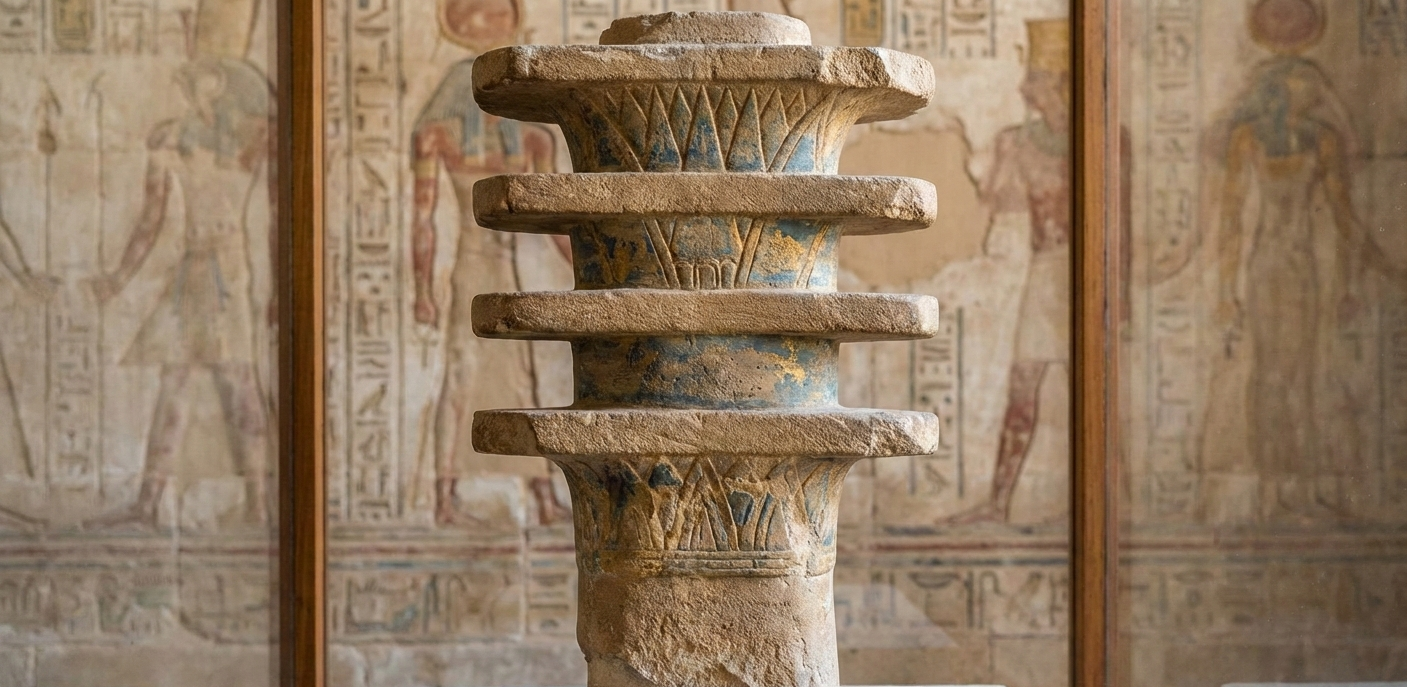
The Djed Pillar: Symbol of Stability and Eternal Power
The djed pillar stands as one of ancient Egypt's most enigmatic and powerful symbols, representing stability, endurance, and the backbone of civilization itself. This iconic hieroglyph appeared throughout Egyptian art, architecture, and religious ceremonies for thousands of years, embodying concepts that were central to Egyptian cosmology and daily life.
What is the Djed Pillar?
The djed pillar is an ancient Egyptian symbol resembling a vertical column with a wide base and four horizontal bars near the top. While its exact origins remain debated among Egyptologists, this sacred emblem became deeply intertwined with Egyptian religion, particularly associated with Osiris, the god of the afterlife and resurrection.
The word "djed" itself means "stability" or "endurance" in ancient Egyptian, reflecting the symbol's core meaning. Ancient Egyptians believed the djed pillar represented the spine of Osiris, making it a potent symbol of strength, permanence, and the triumph of order over chaos.
The Religious Significance of the Djed Pillar
In Egyptian mythology, the djed pillar held profound spiritual importance. According to legend, when the god Set murdered Osiris and scattered his body parts across Egypt, Isis recovered and reassembled her husband's remains. The backbone of Osiris became immortalized as the djed pillar, symbolizing resurrection and eternal life.
The symbol also represented the sacred tree in which Osiris's body was temporarily hidden, as well as the concept of the world axis connecting earth to the heavens. Priests performed elaborate ceremonies called "Raising of the Djed," where they would physically erect a djed pillar to ensure the pharaoh's strength and Egypt's continued stability.
Djed Pillar in Egyptian Art and Architecture
The djed pillar appeared extensively throughout Egyptian visual culture. Artists incorporated it into tomb paintings, temple reliefs, jewelry, and amulets. Pharaohs were often depicted holding the djed alongside other power symbols like the ankh and was scepter, emphasizing their divine authority and the stability of their reign.
In funerary contexts, the djed pillar took on special significance. Egyptians placed djed amulets with mummified bodies to ensure the deceased's spine remained intact in the afterlife, allowing them to stand upright and walk among the gods. The symbol frequently appeared on sarcophagi, coffins, and the walls of burial chambers.
Temple architecture also featured the djed prominently. Columns were sometimes designed to echo the djed's form, and the symbol adorned walls as both decoration and spiritual protection.
The Djed Pillar and Osiris: An Eternal Connection
The association between the djed pillar and Osiris became one of the most enduring in Egyptian religion. As god of the underworld, fertility, and regeneration, Osiris embodied the cyclical nature of life, death, and rebirth that the Nile civilization depended upon.
During the annual Osiris festivals, particularly at Abydos, priests conducted rituals involving the djed pillar to ensure agricultural fertility and cosmic order. These ceremonies reinforced the pharaoh's connection to Osiris and guaranteed the land's prosperity.
Symbolism and Meaning of the Djed Pillar
Beyond its religious associations, the djed pillar carried multiple layers of meaning in Egyptian thought:
Stability and Permanence: The djed represented the unchanging order of the universe and the enduring power of the pharaoh's rule. In a civilization that valued ma'at (cosmic order and justice), the djed embodied these principles in visual form.
Strength and Support: Like a backbone supports the body, the djed symbolized the structural foundation supporting Egyptian society, from the gods to the pharaoh to the people.
Resurrection and Renewal: Through its connection to Osiris, the djed promised rebirth after death and the eternal cycle of regeneration that governed both nature and the afterlife.
Connection Between Realms: The vertical nature of the djed suggested a cosmic axis linking the underworld, earth, and heavens, allowing communication and movement between these domains.
Djed Pillar Amulets and Protection
Ancient Egyptians crafted djed pillar amulets from various materials including faience, gold, carnelian, and lapis lazuli. These protective charms were worn by the living and placed with the dead, serving as powerful talismans.
The Book of the Dead included specific spells to be recited over djed amulets, transforming them into magical objects that could protect the deceased's body and guarantee their resurrection. Chapter 155 specifically addresses the djed amulet, describing how it should be placed at the throat of the mummy to preserve the spine and enable the deceased to rise again.
The Raising of the Djed Ceremony
One of ancient Egypt's most important festivals centered on the djed pillar. The "Raising of the Djed" ceremony occurred during the Heb Sed festival and other significant occasions. This ritual involved physically erecting a large djed pillar, symbolizing the resurrection of Osiris and the renewal of the pharaoh's power.
The ceremony reinforced cosmic order, celebrated the king's vitality, and ensured the continued stability of Egypt. Priests, nobles, and sometimes the pharaoh himself participated in pulling the djed upright using ropes, accompanied by prayers and offerings.
Djed Pillar Symbolism Today
The djed pillar continues to fascinate scholars, spiritual seekers, and those interested in ancient Egyptian culture. Modern jewelry designers incorporate the symbol into pendants and earrings, while it appears in tattoos, artwork, and decorative objects inspired by Egyptian aesthetics.
For contemporary students of Egyptian symbolism, the djed represents timeless principles of stability, resilience, and the human desire for permanence in an ever-changing world. Its elegant form and profound meaning ensure the djed pillar remains one of ancient Egypt's most recognizable and meaningful symbols.
Conclusion
The djed pillar exemplifies how ancient Egyptians encoded complex philosophical and spiritual concepts into simple, powerful visual symbols. Representing everything from the backbone of Osiris to the stability of civilization itself, this enigmatic emblem connected the physical and spiritual realms in Egyptian thought.
Whether appearing in temple carvings, funerary amulets, or ceremonial rituals, the djed pillar communicated messages about order, strength, and eternal life that resonated throughout ancient Egyptian culture. Today, this ancient symbol continues to inspire and intrigue, offering modern observers a glimpse into the sophisticated worldview of one of history's greatest civilizations.
Understanding the djed pillar provides insight not only into Egyptian religious beliefs but also into universal human concerns about stability, mortality, and the search for meaning that transcends time itself.
